


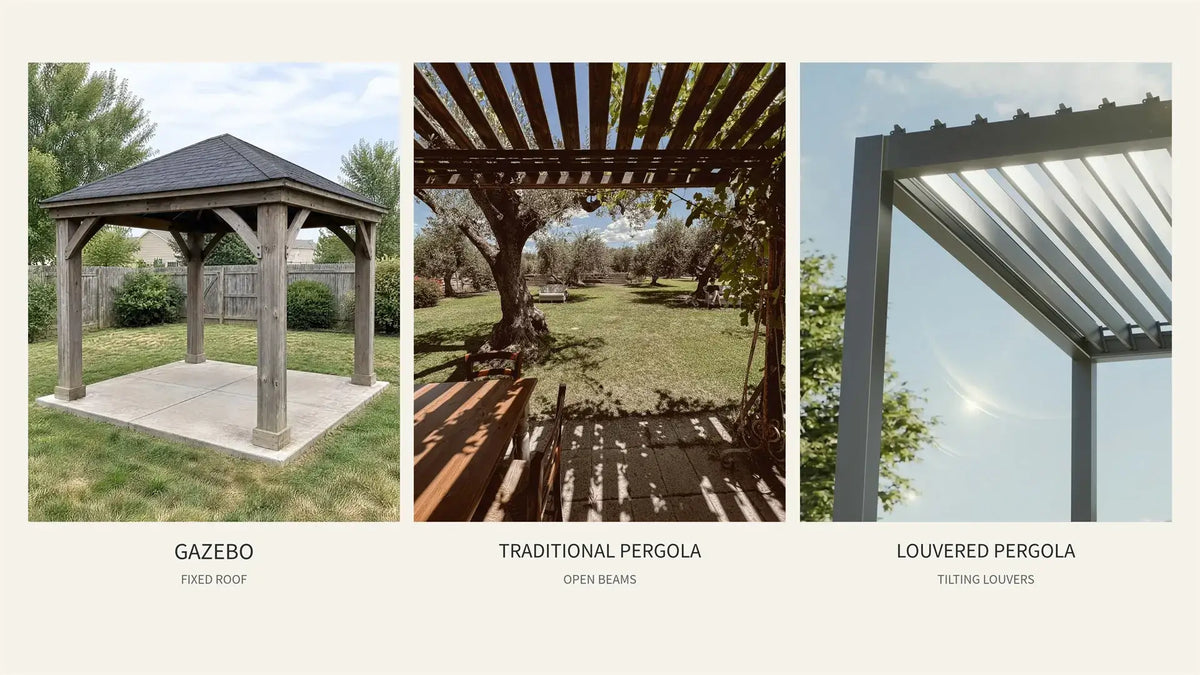
Roof design is usually the clearest difference between a pergola and a gazebo. Most gazebos have a fixed roof that provides consistent overhead shade. A traditional pergola has open beams that let sunlight and rain through.
A louvered pergola is a type of pergola with adjustable louvers that control sunlight and airflow. When closed, the louvers may shelter the area below from overhead rain. Rain performance depends on the model's drainage design, installation, and weather conditions.
Think about how you plan to use the space and whether direct sun or rain is the main obstacle. If privacy matters, look at side options such as screens or curtains; the roof alone will not provide it. Then consider room for furniture and posts, installation requirements, and the total project cost.
Pergola vs. Gazebo: Key Features
Use this table to see what each roof can do before looking at individual models. If fixed overhead cover matters most, start with the gazebo column; if you want filtered light or adjustable shade, look at the two pergola designs. Then use the installation, cost, and upkeep rows to rule out options that do not fit your site or budget.
| Feature | Gazebo | Traditional Open-Roof Pergola | Louvered Pergola |
|---|---|---|---|
| Roof design | Usually a fixed roof; hardtop and fabric-canopy models exist | Spaced beams or rafters | Louvers that open, tilt, and close |
| Shade | Consistent overhead shade; coverage shifts with the sun | Partial shade that changes with beam spacing and sun angle | Adjustable overhead shade when louvers are tilted or closed |
| Rain protection | Fixed overhead shelter if the roof is designed for rain; open sides may admit wind-driven rain | Rain passes through the open roof | Closed louvers can help shelter the space if the model has suitable drainage; open sides remain exposed |
| Airflow | Through open sides and, on some models, roof vents | Through the open roof and sides | Changes with louver position; side openings also matter |
| Privacy and side protection | Screens, curtains, or walls may be available | Usually open-sided; add-ons depend on the design | Usually open-sided; compatible screens or walls depend on the model |
| Placement | Usually freestanding | Freestanding or attached, depending on the design | Freestanding or attached, depending on the model |
| Installation | Usually freestanding; the roof, base, and anchors must suit the site | Freestanding or attached; a house connection needs a suitable structure | Roof mechanism and drainage add assembly steps; motorized models also need a suitable power setup |
| Cost drivers | Size, roof material, side panels, site work, and assembly | Size, frame material, cover or accessories, and site work | Size, roof mechanism, drainage, accessories, and installation |
| Maintenance | Care depends on the roof covering, frame, and side panels | Care depends on the frame material and any canopy or climbing plants | Clean louvers and drainage channels; follow the model's care instructions |
| Best fit | A gathering area where fixed overhead shelter is the priority | A space where filtered light and an open roof are welcome | A patio where you want to adjust light and overhead coverage |
Note: A louvered pergola is a type of pergola, listed separately here to highlight the differences between adjustable-louver and traditional open-roof designs. Other pergola roof designs also exist. Actual features and weather protection vary by model.
What Is a Gazebo?
A gazebo is typically a freestanding outdoor structure with a continuous roof supported by posts. It creates a sheltered place for dining, lounging, or gathering. The sides are often open, though some models offer screens, curtains, or panels.

Common Gazebo Designs and Features
Gazebos come in square, rectangular, and multi-sided designs. Hardtop models use rigid roof panels, while soft-top models use a fabric canopy.
Some have roof vents, railings, mosquito netting, curtains, or side panels. Check which features come with the kit and which are optional.
Benefits and Limitations of a Gazebo
A fixed roof gives a dining or seating area consistent overhead cover, though low-angle sunlight can still enter through the sides. It can also shelter the space from overhead rain, but roof material, drainage design, and wind exposure affect how much protection you get.
Mosquito netting can help keep insects out; curtains can add privacy and some side protection. Solid panels may offer more coverage, depending on the model.
Hardtop gazebo roofs usually stay fixed, so you cannot open them for more sun or airflow. Before choosing a model, check both its overall roof dimensions and the clear space between its posts. The roof may extend beyond the posts, while the space between them determines how much room you have for furniture and walkways.
What Is a Pergola?
A pergola is an outdoor structure typically supported by posts. It can be freestanding or attached to a building. Its overhead design can range from open beams to adjustable louvers or retractable covers, so the word pergola alone does not tell you how much shade or rain shelter it provides.
Traditional Open-Roof Pergolas

A traditional pergola has spaced beams or rafters overhead, sometimes arranged in a lattice. They cast shifting patterns of shade while leaving the sky visible, which can work well over a garden path or a seating area where you want some sun.
Rain passes through the gaps, so the structure itself offers little overhead rain shelter.
Some pergolas can be fitted with a compatible fabric canopy for more shade. Check how much of the roof it covers and whether the fabric is intended for rain; a shade canopy is not automatically a rain cover. If you plan to grow climbing plants over the frame, check the manufacturer's guidance on what that structure can support.
Modern Louvered Pergolas

A louvered pergola has movable louvers in its roof. You can open or tilt them to change the light reaching a table or lounge area, then close them to create a more continuous overhead cover. This is useful when the same patio gets strong sun at one time of day but feels too dark under a fixed roof at another.
For rain, check more than whether the louvers close. Models with integrated drainage can carry water from the closed roof into gutters and outlets, but water paths and capacities vary.
Open sides still allow wind-driven rain in. Roof controls may be manual or motorized, and features such as lighting or side screens depend on the model.
Pergola vs. Gazebo: 5 Key Differences
A roof can cover the table while low-angle sun or wind still reaches the seats. The structure also has to leave enough usable room, anchor to your site, and fit your total budget and upkeep plans.
1. How Do Gazebo and Pergola Roofs Handle Sun and Rain?
Gazebo roofs offer fixed overhead cover. Open-beam pergolas let sunlight and rain through, while louvered pergolas let you adjust overhead light. Shade at the table still depends on beam spacing, roof material, louver position, and the sun's angle.
For rain, check three things:
- Roof material: A fabric canopy meant for shade may be water-resistant without being waterproof.
- Drainage: Check how a closed louvered roof directs water away, along with the model's weather limits.
- Side exposure: Wind-driven rain can reach furniture beneath an open-sided structure.
2. How Do Gazebo and Pergola Sides Affect Airflow and Privacy?
Open sides allow airflow but leave seating exposed to low-angle sun, nearby sightlines, and wind. Gazebos and pergolas can add side protection only when the chosen model supports the accessory. Stand where the seating will go and check which sides need coverage.
Then check which side options the model actually supports:
- Mosquito netting helps keep insects out while leaving the view relatively open.
- Curtains or shade screens add privacy and reduce low-angle sun, but may also limit airflow.
- Solid panels or shutter walls provide more side coverage, depending on their design.
Confirm what comes with the kit and any use limits for the accessories. Roof vents or open louvers can affect airflow above, but they do not replace side protection.
3. What Should You Check Before Installing a Gazebo or Pergola?

Mark where the roof edges and posts would fall at your chosen site. Leave room for pulled-out chairs, doors, walkways, and any side accessories you plan to use.
Before ordering, confirm:
- Support and anchoring: Confirm whether an existing deck or slab can support and anchor the model, or whether new footings are needed.
- Connection: An attached pergola also needs a suitable connection to the building.
- Local requirements: Check permits, setbacks, and HOA rules. For motorized roofs or lighting, check the power supply and whether electrical work is required.
Sizing example: EaglePatio's N5 E Lite (model N5-ELITE) is listed as 7.2 × 6.6 ft, but its assembly manual shows an overall width of 8 ft 10½ in with the side counters included.
The manual also notes that the roof overhang may require extra clearance. On a narrow patio, plan around the full installed dimensions and post locations rather than the nominal size alone.
4. Which Costs More: a Pergola or a Gazebo?
Neither structure is always cheaper. The cost depends on the models and installation work involved. Build an itemized budget or request a quote for the finished project, including:
- The structure, roof configuration, accessories, and delivery.
- Site preparation, footings or anchors, assembly, and electrical work if needed.
- Applicable taxes and permit fees.
When weighing prices, use models with a similar usable area and include the same installation work. Listed prices for an open-roof kit, a motorized louvered model, and soft-top or hardtop gazebos may cover very different components and services.
Estimate ongoing maintenance and potential replacement costs separately.
5. What Affects Gazebo and Pergola Maintenance and Durability?
Care depends on the material and roof system:
- Wood: Clean and refinish it on the manufacturer's schedule; check for moisture damage.
- Powder-coated metal: Wash it and check for chips or peeling, especially where exposed steel could rust.
- Fabric tops: Follow the care instructions and check whether a compatible replacement is available.
- Louvered roofs: Inspect moving parts and keep drainage channels clear, following the model's instructions.
For long-term durability, check each model's required anchoring and published wind or snow-load limits. Review warranty coverage for the frame, roof, and moving parts separately, and check whether replacement parts are available. A material label or warranty term alone does not establish how long a structure will last.
Which Pergola or Gazebo Is Right for Your Backyard?
Choose a gazebo for fixed overhead cover, a traditional pergola for filtered daylight, or a louvered pergola when you want to adjust shade.
An open-roof pergola offers no rain shelter on its own; if rain matters, look for a compatible cover or another roof type. Then confirm that the model fits your space and installation conditions.
Choose a Gazebo When You Want Fixed Overhead Cover

A gazebo suits a freestanding dining or lounge area when you want a roof that stays in place. Make sure its roof and posts fit your layout; side shade will still change with the sun.
Check before buying:
- Review roof materials and the maker's rain, wind, or snow guidance where available.
- Confirm the clear space between posts and which side accessories are included.
Choose a Traditional Pergola When You Want Filtered Sunlight

A traditional pergola frames a garden path or patio seating area while keeping daylight and an open view of the sky. Its shifting shade works best when overhead rain shelter is not a priority.
Check before buying:
- Look at shade during the hours you will use the space.
- If you want a canopy or climbing plants, confirm that the particular frame supports them.
Choose a Louvered Pergola When You Want Adjustable Shade

On a patio you use at different times of day, a louvered pergola lets you change overhead light and shade. Closed louvers may also provide overhead rain protection if the roof and drainage are designed for it, but open sides remain exposed.
Check before buying:
- Review the model's rain performance, drainage design, and weather limits.
- Check whether the roof uses manual or motorized controls, along with any power, anchoring, and care requirements.
- Confirm that the screens or lighting you want are compatible with that model.
Pergola vs. Gazebo: Questions to Answer Before You Buy
Once you have narrowed the choice, confirm the roof's rain and shade performance, the installation requirements, and any grill or permit rules that apply at your home.
Is a gazebo better than a pergola for rain?
A gazebo with a roof designed for rain provides fixed overhead shelter, while a traditional open-roof pergola lets rain through. A louvered pergola with suitable drainage may also shelter the area below when closed. Wind-driven rain can still enter any open-sided structure.
Does a pergola provide full shade?
A traditional open-roof pergola provides partial shade, while closed louvers can create more continuous shade overhead. Neither guarantees shade from low-angle sunlight entering through open sides. Look at where shade falls when you plan to use the space.
Can a pergola be attached to a house?
Yes, if the model is designed for attachment and the building can support the specified connection. Do not assume a freestanding kit can be converted into a wall-mounted one. Check the model's installation instructions and local permit requirements before ordering.
Is a gazebo or pergola easier to install?
Neither is always easier. Both are sold as ready-to-assemble kits, while custom builds and motorized roofs can involve more work. Read the actual manuals for site preparation, anchoring, the number of people needed for assembly, and any electrical work before deciding between DIY and professional installation.
Do you need a permit to install a gazebo or pergola?
Permit requirements for gazebos and pergolas vary by location, size, attachment, and electrical work. An HOA may have separate rules. Ask your local building department about permits and setbacks before you buy, even if the structure is sold as a kit.
Can you put a grill under a gazebo or pergola?
A product labeled grill gazebo or grill pergola does not mean every grill can be used beneath it.
Only consider a covered setup if the specific grill's instructions permit it and you can meet the required overhead and side clearances and ventilation requirements. Check the structure's instructions and local fire rules as well.
For general placement advice, see the U.S. Fire Administration's grilling guidance.
Choose a Pergola or Gazebo That Fits Your Outdoor Plans
Measure the space you need for furniture and walkways, then choose a roof that meets your shade and rain needs and suits your installation surface and budget.
If you want adjustable shade, EaglePatio's L5 offers manual and motorized roof options for patio dining and lounging. For a grill area, N5 and N5 E have manual louvers; N5 E adds side counters and lighting for serving and gathering.
Confirm the specific grill's clearance and ventilation requirements before choosing a structure. For sizes and roof controls, see EaglePatio's louvered pergola collection.


