


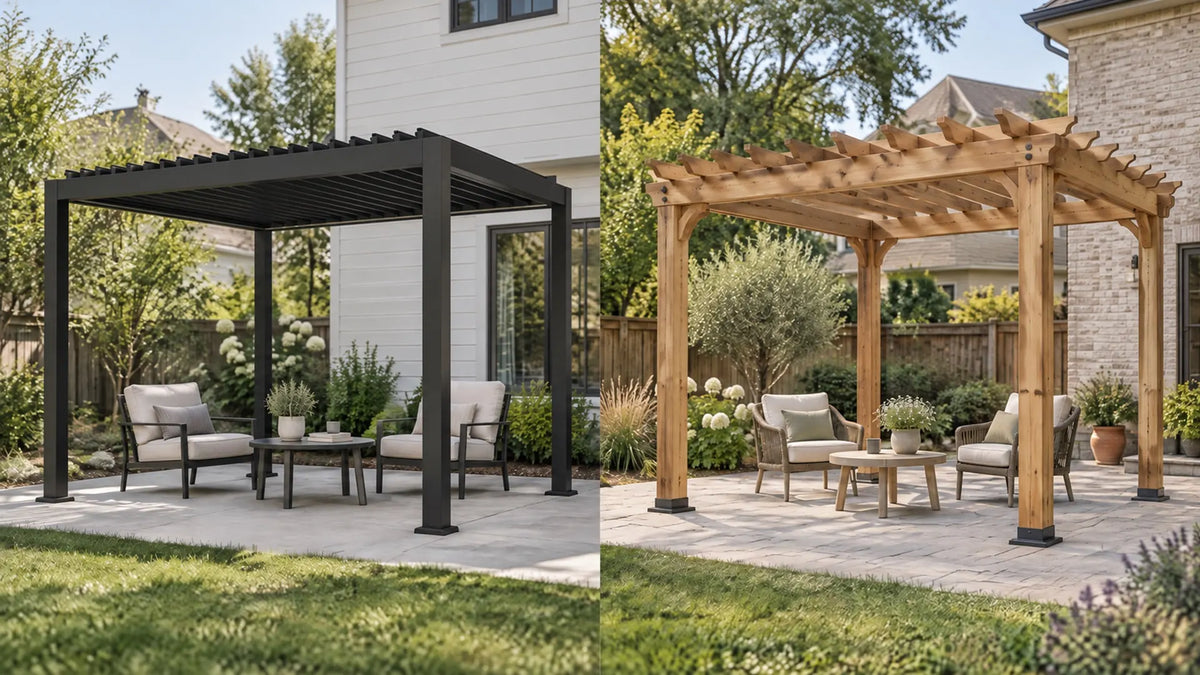
An aluminum pergola is often a good fit if you want to avoid recurring staining and sealing. Wood may suit you better if you value natural grain and custom woodwork and are comfortable maintaining the finish.
Your budget, climate, and roof design also matter. An open wood pergola and an aluminum louvered system offer different shade and rain coverage. Comparing similar sizes and roof designs helps you judge the price difference more fairly.
Aluminum vs. Wood Pergolas at a Glance
Picture the look you want in your backyard, then consider how much upkeep fits your routine.
| Factor | Aluminum Pergola | Wood Pergola |
|---|---|---|
| Appearance | Coated finishes in a range of colors and profiles | Natural wood grain; can be stained or painted |
| Upfront cost factors | Size, roof features, and installation requirements | Size, wood species, roof design, and labor |
| Maintenance | Clean surfaces; check coatings, hardware, and any drainage or moving parts | Clean and inspect wood; renew protective finishes as needed |
| Durability | Frame does not rot or provide food for termites; coatings and hardware still need care | Moisture, rot, and insects can cause damage; species and treatment affect resistance |
| Roof options | Open, fixed, or adjustable roofs, depending on the system | Open beams are common; fixed or adjustable roofs require a compatible design |
| Repairs | Replacement parts may need to come from the original manufacturer | Individual wood components may be repairable or replaceable |
| Installation | Prefabricated kits and custom designs; requirements depend on the design and site | Precut kits and custom designs; requirements depend on the design and site |
Wood species, aluminum finishes, hardware, and roof design vary, so check the details of the models you're considering.
How Do Aluminum and Wood Pergola Costs Compare?
Neither material is always cheaper. The kit price is only part of the budget; foundations, assembly, and other site work can change the total.

Compare Similar Sizes, Roofs, and Project Scopes
For a fair comparison, match the dimensions, roof function, and installation scope. Specify the wood species or aluminum system, and check how much assembly or on-site construction each quote includes.
These kits have similar nominal sizes but different roof systems:
- Backyard Discovery Beaumont, nominal 12 × 10 ft: US$1,199 on November 6, 2026. Cedar kit with an open trellis roof; assembly excluded.
- EaglePatio L5-PLUS, nominal 10 × 12 ft, manual roof, black: US$4,699 on November 6, 2026. Aluminum kit with adjustable louvers; assembly excluded.
Both listings showed sale prices. The price gap cannot be attributed to frame material alone. Recheck prices before ordering.
For either option, ask the seller or installer to mark these items as included, extra, or not yet quoted:
- Pergola and roof: Structure, roof system, and selected accessories.
- Delivery and installation: Shipping, site preparation, foundations, anchoring, and assembly.
- Other project costs: Any required electrical work, applicable taxes, and permit fees.
Upfront Costs vs. Long-Term Ownership Costs
With wood, budget for periodic finish care and repairs to damaged wood. Stain or sealer, supplies, and hired labor can add to ownership costs. How often you refinish depends on the wood, finish, and local conditions.
Aluminum avoids routine wood refinishing, but cleaning and inspections still take time. Coatings, hardware, or moving roof parts may need attention if damaged or worn. For motorized designs, check replacement-part pricing and warranty coverage.
Doing the work yourself means budgeting for supplies and setting aside time; hiring help adds service costs.
What Maintenance and Repairs Does Each Material Require?
Wood pergolas may need periodic staining or sealing as well as cleaning and inspections. Aluminum avoids wood refinishing, but its coatings, hardware, and any roof mechanisms still need care. Think about which tasks fit your routine.
Caring for a Wood Pergola
Keep the wood clean and inspect joints, fasteners, and areas that stay damp. Look for splinters, softened wood, or damage around connections. Refinish according to the wood and coating instructions. Even if you like a weathered gray appearance, follow any required protective treatment.
For the Beaumont pergola, Backyard Discovery's care guide recommends a water repellent or stain each year. It also lists protective sealing as a warranty requirement. Follow the care instructions for the wood pergola you choose.
Small surface splinters may be sanded and resealed. A damaged board may be replaceable, depending on its location and connections. Have a qualified builder assess damage to posts, beams, or their connections before planning a repair.
Caring for an Aluminum Pergola
Inspect coated surfaces for damage and check for loose fasteners. On louvered models, clear debris from gutters and check that the louvers move normally.
For the EaglePatio L5-PLUS 10×12 pergola with a manual roof, the V260105 manual recommends cleaning every three to four months and seasonal checks of anchoring and roof operation. For cleaning, it specifies warm water, a non-abrasive, pH-neutral detergent, and a soft cloth or sponge, followed by a thorough rinse. Follow the manual for your selected model.
If a coating is damaged, ask the manufacturer for the appropriate repair method. Bent frame sections or damaged louvers may need matching replacement parts.
For either material, ask how replacement parts are sourced and which repairs require professional assistance. Lower routine maintenance does not automatically make a pergola easier to repair.
How Do Aluminum and Wood Pergolas Hold Up in Your Climate?
A pergola should suit the weather your backyard faces year after year. Neither frame material guarantees a set lifespan. Climate, construction, and care affect how the pergola ages.
In damp climates, wood that stays wet is more vulnerable to decay. Repeated wetting and drying can also cause swelling, shrinkage, and surface cracking. UC Agriculture and Natural Resources explains that the inner heartwood of western red cedar and redwood can offer natural decay resistance, while their outer sapwood is much less resistant. With pressure-treated pine, check that the preservative treatment suits the exposure. Construction details that help joints drain and dry also matter.
Aluminum does not rot. Aluminum Association guidance describes corrosion risks involving aluminum, moisture, and contact with other metals. Coastal salt and moisture can also accelerate corrosion of metal fasteners and connections in either type of pergola. Check the coating, hardware compatibility, and any coastal-use limits with the supplier. In strong sun, appearance also changes: wood can gray, and powder coatings may lose color or gloss as they weather.
For wind and snow, request documentation for the exact model and size, including its ratings and foundation and anchoring requirements. For adjustable roofs, check whether the ratings depend on louver position and follow the model's instructions for severe weather. A manufacturer or qualified local professional can help assess whether the proposed setup suits your site. A warranty period does not establish service life or storm performance.
How Does Roof Design Affect Shade and Rain Coverage?
Shade and rain coverage depend on the roof system. That shapes how you use the space, from morning coffee in filtered sunlight to lunch sheltered from a passing shower.

- Open beams or slats provide partial shade, but gaps let rain through.
- Fixed roof panels provide continuous overhead coverage. Opaque panels block direct sunlight, while clear or translucent panels let daylight through.
- Adjustable louvers let you change the amount of sunlight overhead. Systems designed for rain protection can channel water from closed louvers into gutters.
Aluminum pergolas aren't always louvered. Wood frames can also be designed to support fixed panels or a compatible louver system.
Even among louvered roofs, rain protection varies with how the louvers close and how water drains. Check the system's installation requirements and weather limits. Wind-driven rain can still enter through open sides.
Appearance and Customization: Wood vs. Aluminum

The pergola should feel at home beside your house and garden. Wood brings natural grain and color variation that can complement an existing wood deck or fence. Semitransparent stains leave the grain visible, while paint gives a more uniform color. A custom wood design can include shaped beam ends or decorative brackets, with dimensions planned around your space.
Aluminum offers coated finishes and different post and beam shapes. Options may include custom colors or wood-look finishes that imitate natural grain. Available finishes and the components they cover depend on the manufacturer. Both materials come in standard kits and custom designs, though sizes and details vary by supplier. View finish samples beside your home's existing materials. Check whether the posts and beams look too bulky or too slender for the space.
How Do Installation Requirements Compare?
Both aluminum and wood pergolas come as prefabricated kits. Designs built on site may involve more measuring, cutting, and fitting.

Assembly is only part of the project. Check the support beneath your patio and the model's foundation and anchoring requirements. Site work may involve new footings or additional deck support. Confirm local permit and any HOA requirements before ordering the pergola or scheduling installation.
Review the selected model's tools, crew size, and lifting requirements before deciding on DIY assembly. For example, the V260105 manual for the EaglePatio L5-PLUS 10×12 pergola with a manual roof calls for at least two capable adults and recommends three installers. Arrange qualified help for structural concerns and any required electrical work.
If you plan to add screens, lighting, or other accessories, confirm approved attachment points and weight limits with the supplier or builder. Unauthorized changes may affect safety and warranty coverage. Check the manufacturer's alteration rules and warranty terms before cutting or drilling beyond the installation instructions.
Which Pergola Material Should You Choose?

Start with two questions about the look you want and the upkeep you're willing to handle.
1. Are you willing to stain or seal a wood pergola when needed, or pay someone to do it?
- No → Choose aluminum. You'll avoid recurring staining and sealing, but still need cleaning and inspections.
- Yes → Go to question 2.
2. Is real wood grain or custom woodwork a priority?
- Yes → Choose wood.
- No → Compare the complete project quotes. At similar prices, favor aluminum if you value less finish care. Choose wood if a comparable option saves enough to matter to your budget and you're comfortable with its upkeep.
Prefer a wood look with less finish care? Some aluminum systems offer wood-look finishes. Check which components are available with that finish and view samples before choosing.
Before ordering: Confirm the specific model's roof coverage, foundation and anchoring requirements, and suitability for your local weather. Apply these checks to either material.
Frequently Asked Questions
A few details are worth a closer look before you settle on a model.
Does an aluminum pergola rust?
Aluminum itself does not rust like iron or steel, but it can corrode. Steel fasteners or other components may also rust. Coatings and hardware selection still matter, so check the materials and care requirements for the complete pergola, especially in coastal conditions.
Do aluminum pergolas get hot in the sun?
Exposed aluminum can get hot in direct sun. The finish affects how much solar energy the surface absorbs. Frame temperature alone doesn't tell you how comfortable the seating area will feel. Shade, airflow, air temperature, and humidity also matter.
Are aluminum louvered pergolas noisy in the rain?
Rain on aluminum louvers can produce a metallic sound. How noticeable it is depends on rainfall intensity and roof construction. If quiet conversation during showers matters to you, ask whether the supplier has a demonstration or recording of rain on that model.
Can a wood pergola have a louvered roof?
A wood pergola can have a compatible louvered roof, but adjustable louvers alone do not guarantee rain protection. Before adding one to an existing pergola, have the system supplier or a qualified builder assess its supports, connections, and the proposed roof's loads.
Can aluminum and wood pergolas be attached to a house?
Both aluminum pergolas and wood pergolas are available in designs intended for house attachment. The house must provide suitable structural support. Confirm the model's connection requirements with the supplier or a qualified professional before ordering. Don't assume a freestanding kit can be converted.
Is aluminum always more expensive than wood?
An aluminum pergola is not always more expensive than a wood pergola. Size, wood species, roof design, and installation all affect the total cost. Compare complete project quotes for similar dimensions and roof functions.
Sources: This guide uses manufacturer manuals, product listings, and materials guidance. Product examples refer to specific configurations; care and installation requirements apply to the named models.
If adjustable shade and less routine refinishing fit your priorities, see EaglePatio's aluminum louvered pergolas. Look at the sizes and manual or motorized roof options, then check the installation requirements for your preferred model.


