


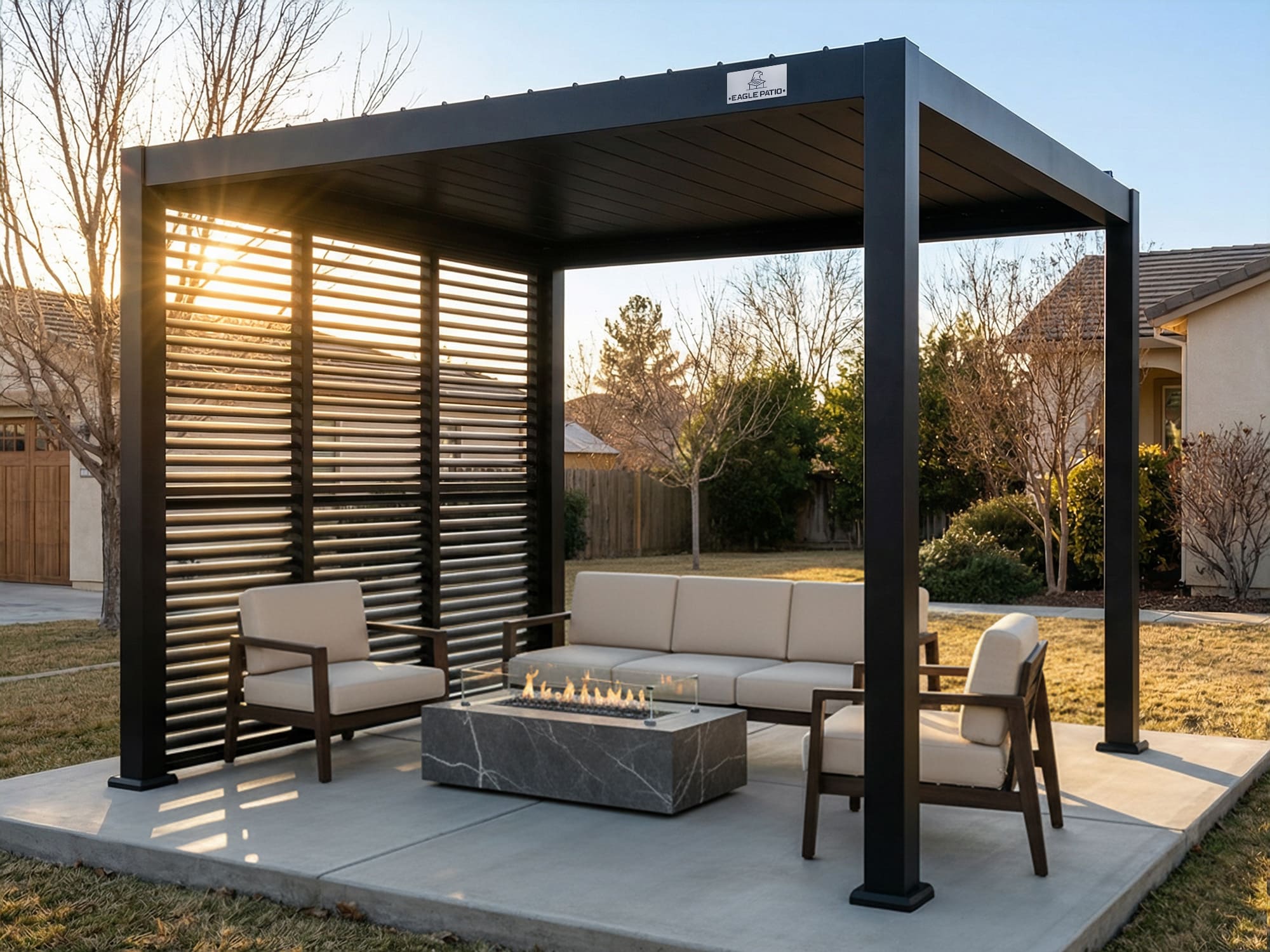
In short, some pergolas can hold a swing safely, and many should not. A swing-ready pergola usually has strong timber or engineered aluminium beams, solid concrete footings, and a design that has been checked for both the swing’s weight and the extra forces created when people move. Lightweight kits, older structures, or frames with unknown ratings are poor candidates for swings. The sections below help you figure out which side your pergola structure sits on and what safe options you have.
How Much Weight Can a Pergola Hold?
Most residential pergolas are sized for fairly modest roof loads rather than heavy hanging loads. Many metal systems are engineered around roughly 10–20 pounds per square foot of live load on the roof. Heavier all-season or snow-rated designs may be checked in the 40–60 pounds per square foot range or higher. Some very robust, fully engineered models go beyond that. Installers who hang light items such as plants often work in the range of about 20–40 pounds per rafter instead of pushing a single member to its limit.
All of those values describe static loads spread over an area or across multiple rafters. A swing behaves differently. It concentrates weight at one point on one beam and adds motion on top. That is why any reliable answer for your backyard has to come from either the manufacturer’s engineering tables or a structural engineer who looks at your exact pergola structure, spans, and connections.

Key Factors That Control Capacity
When you think about adding a swing under an outdoor pergola, these design details matter most:
Material Type
- Solid wood with generous beam sizes can carry substantial loads when properly detailed.
- Steel and aluminium perform well when profiles are robust and connections are strong.
- Lightweight vinyl kits usually prioritize low maintenance and appearance, not high structural demand.
Beam Size and Span
Deep, wide beams over short spans stay stiffer and can carry more load. Long, slim members tend to deflect and vibrate, which lowers their safe capacity for a swing.
Post Layout and Bracing
More posts, shorter distances between them, and some diagonal bracing all help share the load. Very open designs with long, clean spans often have less reserve strength at any single point.
Design Purpose
Many engineered systems are designed around wind and snow on the roof. The checks focus on keeping the frame standing in storms, not on supporting people in motion below.
Quality of Pergola Installation
Even a durable pergola can underperform if the pergola installation was done with shallow footings, undersized anchors, or loose connections. Those weaknesses show up quickly once moving loads are added.

How Stable Is a Pergola in General?
A well-built, durable pergola is usually very stable under the conditions it was designed for. Properly sized posts tied into concrete pads or piers, beams with good bearing, and rigid connections between members allow the frame to stand up to typical wind and weather. Many modern systems are tested for significant wind speeds when anchored as specified.
That overall stability is why a solid frame feels reassuring. The columns do not wobble, the roof does not creak in every gust, and the structure stays upright through bad weather. That global behavior, however, describes the pergola structure as a whole rather than any particular beam.
Whole-Structure Stability vs Local Strength
The key distinction is this:
- Whole-structure stability is about how the entire frame behaves under wind, gravity, and light roof loads.
- Local strength is about how one specific beam or connection handles a concentrated load in one spot.
A swing asks for local strength in a big way. The entire weight sits on one pair of hangers that attach to one area of one beam. That beam might be:
- A smaller secondary member rather than the main header.
- Connected into a grid of rafters and slats that are more flexible than solid framing.
- Reliant on brackets or screws chosen for static loads rather than repeated impacts.
So a pergola can feel very stable as a whole and still be a poor choice for hanging a swing from a single beam.
How Swing Movement Creates Extra Force on Your Pergola Structure
Static Load vs Moving Load
Static load sounds simple: imagine a 200-pound adult sitting in a 50-pound swing, so the connection at the top carries about 250 pounds while everything is still. The moment the swing starts moving, that number stops being fixed. As the seat climbs and falls, the chains or ropes tighten and slow the rider down, which spikes the force at the support point. In typical use, those forces can climb to around one and a half to two times the quiet weight, so that same 250-pound setup can push into the 400–500-pound range, especially if someone swings high, changes direction quickly, or jumps in and out of the seat.
Concentrated Load on a Single Beam
Most residential porch swings carry ratings in the 250–500-pound range, and those numbers assume the swing hangs from framing that was actually designed for that demand. A decorative beam in a pergola structure may be smaller than a porch header, tied into a flexible grid of rafters and slats, or held together with brackets that dislike repeated shock. Every swing cycle sends another stress pulse through the beam and hardware, and playful habits like standing, twisting, or pushing from the side raise that stress again. Over time, those cycles can loosen connections, stretch bolt holes, and create cracks or fatigue, all triggered by a swing that seemed harmless on a quiet afternoon.
Pergola Swing Safety Tips You Shouldn’t Ignore
- Make sure your pergola is built with solid timber or robust metal framing rather than thin decorative pieces.
- Confirm that all posts are securely anchored into proper concrete footings instead of sitting loosely on pavers or a thin slab.
- Ask the manufacturer or a structural engineer to verify that your chosen beam can safely support both the swing and moving riders.
- Use swing-rated hardware with load ratings higher than the combined swing and rider weight and fasten it directly into the main structural beams.
- Leave clear space in front of and behind the swing and inspect beams and hardware at least once each outdoor season, stopping use if anything looks or sounds wrong.
Best Pergola Swing Alternatives: Safe Options to Consider
Sometimes the safest answer is to keep swing loads off the pergola structure entirely. You can still enjoy the same atmosphere in other ways.
Freestanding A-Frame or Swing Set
A freestanding swing frame carries its own loads from the top beam down into the legs and into the ground. The pergola stays focused on shade, dining, or an outdoor kitchen. This layout works especially well for families with active children, because the play zone and seating zone stay separate.
Hanging Chairs and Egg Chairs With Stands
Hammock chairs and egg chairs with their own metal stands bring a floating seat under the roof without asking anything from the beams above. The stand transfers weight directly down to the patio surface. This approach suits renters and owners who want flexibility, because nothing is permanently bolted into the frame.
Daybeds, Gliders, and Deep Seating
If the goal is a relaxing retreat rather than big, sweeping swings, consider:
- Outdoor daybeds with thick, weather-safe cushions.
- Glider benches that move gently on a short track.
- Deep lounge seating arranged under the shade with side tables and lighting.
These setups transform the area into a place people use daily, while the pergola structure only provides cover and visual framing.
Designing a Swing-Ready Frame From the Start
If you plan to build a pergola and know from day one that a swing is part of the vision, share that requirement early with your designer or contractor. A swing-ready layout can include:
- A dedicated swing beam sized for the expected loads.
- Posts positioned to shorten that beam’s span.
- Engineering that combines roof loads, local wind and snow, and swing motion in one design.
Designing this way from the beginning usually costs less and works better than trying to retrofit a swing into a finished frame.

Final Thoughts: Making the Right Decision for Your Pergola Swing
A swing under clean pergola lines looks beautiful, yet structure and safety have to lead the decision. Capacity varies with design, climate, and installation quality. Swing motion adds moving, concentrated forces that can climb far above simple seated weight and focus all of that demand on a single beam. If your frame was not engineered for that, the safest answer often involves a freestanding swing or more passive seating under the shade. When any doubt remains, a conservative choice and professional input will age much better than a risky shortcut.
FAQs About Pergola Swings
Q1: Can any wooden pergola hold a swing?
No. Some heavy timber frames can be adapted after engineering review, while many light wood kits are not designed for swing loads at all. Beam size, span, connection details, and footing design all need to support both weight and motion.
Q2: Is a metal pergola safer for a swing than a wood design?
Metal framing can handle high forces in many cases, although thin, decorative systems may not. The material alone does not decide safety. Beam dimensions, bracing, and how the posts tie into concrete are more important.
Q3: Do I need a structural engineer for a simple porch swing?
If your documentation already lists a swing-ready beam with clear load ratings and installation steps, that may be enough. If capacity is unknown or the structure was never designed around swings, a short consultation with an engineer is a smart move.
Q4: Are hammock chairs safer than full porch swings on a pergola?
Hammock chairs usually carry lower loads and move through a smaller arc than full porch swings, which can reduce demand on the beam. Dynamic load still exists, though, and the simplest way to avoid structural concerns is to use a freestanding stand.
Q5: How often should I inspect swing hardware and the pergola connection?
Plan a careful inspection at the start of each outdoor season and after periods of heavy use or severe weather. Look for rust, cracks, bending, and any movement at the beam or hardware. Stop using the swing and repair or replace parts as soon as something looks wrong.


