


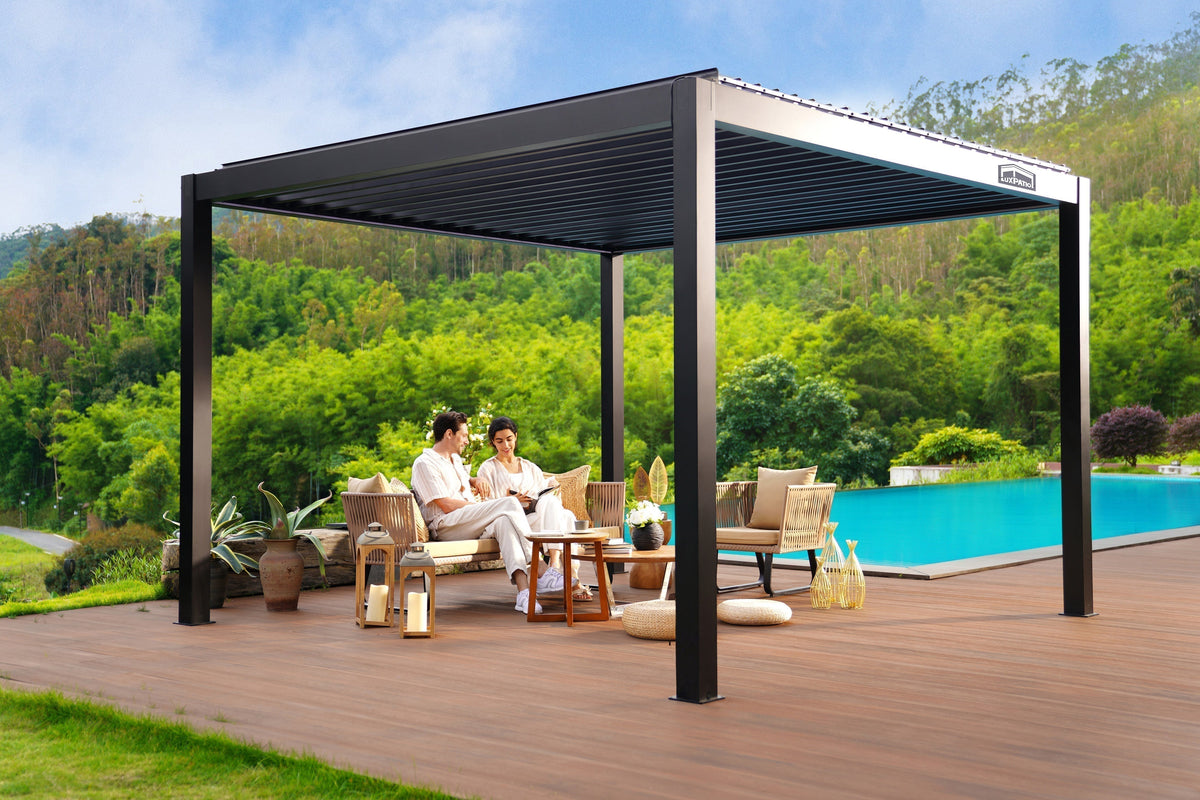
Adding a roofline or frame to your backyard can completely change how often you go outside. Shade appears where there used to be glare, light rain stops ruining dinner, and the patio starts to feel like a real room instead of leftover concrete. The real challenge is deciding which structure fits the way you live. Many homeowners compare a pergola vs gazebo, then discover pavilions and feel torn again. The sections below explain what each option does best so you can match it to your space, climate, and budget.
Pergola vs. Gazebo vs. Pavilion: Quick Comparison Chart
| Feature | Pergola | Gazebo | Pavilion |
| Roof style | Open or adjustable slats, flat roofline | Fully covered, usually dome or hip roof | Fully covered, large gable or hip roof |
| Enclosure level | Semi-open, airy | More enclosed, often screens or railings | Open sides, wide span |
| Main purpose | Sun control and outdoor living | Quiet retreat and small gatherings | Big parties, outdoor kitchens, poolside events |
| Usual location | Patio, deck, close to the house | Garden, lawn, backyard corner | Center of yard, near pool or grill area |
| Typical investment | Low to medium, broad price range | Medium | Medium to high, larger build |
You can think of a pergola as a flexible frame for everyday living, a gazebo as a tucked-away nook, and a pavilion as a roofed entertainment zone. The rest of the article fills in how that plays out in real backyards.

What Is a Pergola? The Master of Sun and Shade
A pergola is a structure made from posts and overhead beams that defines an outdoor room while keeping the sides mostly open. Traditional versions use fixed rafters to cast patterned shade. Modern pergola designs often replace those rafters with slim metal slats that tilt, which allows real control over light and shelter.
5 Key benefits of a pergola:
- Turns an unused patio into a defined outdoor room
- Provides an adjustable shade that tracks the sun
- Supports accessories such as lighting, fans, and side screens
- Works with many footprints, from compact patios to wide decks
- Can use a louvered pergola roof, so a simple patio pergola shifts from open sky to a pergola with roof coverage in a few seconds
The flexibility stands out when you compare a pergola vs a gazebo directly. A gazebo leans toward one fixed level of shade and enclosure. A pergola can change from bright and open in the morning to sheltered and cozy at dinnertime, especially when the roof louvers adjust.
What Is a Gazebo? The Cozy Backyard Retreat
A gazebo usually stands alone on the lawn or in a garden bed. It has a full solid roof, posts around the edge, and often railings, lattice, or screens. The footprint might be round, octagonal, or square. Inside, the space feels separate from the main patio and closer to a small room.
This structure works well for people who want a quieter corner away from the house. The continuous roof blocks direct sun and light rain. Screens cut down on insects so you can sit still without swatting. Railings or partial walls soften sight lines from neighboring windows and give a gentle sense of privacy.
Common ways people use a gazebo:
- Reading corner with a daybed or swing
- Small table for coffee, tea, or card games
- Focal point in a flower garden or near a pond
- Calm spot for meditation or phone calls
A gazebo will not usually cover a full outdoor kitchen or very large dining set, and that is fine. Its strength lies in offering a compact, protected retreat where you can step away from the rest of the yard.
What Is a Pavilion? The Ultimate Outdoor Entertainer
A pavilion looks and feels closer to a simple open-air building. Posts support a full roof that spans a wide rectangular area, while the sides stay open so people can move freely. The structure often sits on concrete, pavers, or a large deck and anchors the center of a big backyard.
Under a pavilion roof, you can place a grill station along one side, a long dining table down the middle, and a seating area at the far end. Guests stay under cover as they move between food, drinks, and conversation. Overhead fans, lighting, and even outdoor heaters can mount neatly under the roof so the space stays comfortable deep into the evening.
A pavilion makes sense when:
- You frequently host parties, barbecues, or holiday gatherings
- You want a large shaded zone near a pool or big lawn
- You plan a full outdoor kitchen and need a reliable shelter for appliances
- You have enough yard that a central structure will not feel cramped
It usually requires a higher budget and more planning than a pergola or gazebo, yet it can turn a plain backyard into a true entertaining hub.

How to Choose: A Decision Guide for Your Backyard
Picking by looks alone often leads to disappointment. A better approach is to start with your real habits and pain points, then select the structure that fits those patterns.
Goal 1: “I Want to Control Sunlight and Heat”
If harsh sun keeps you from using the patio, a pergola gives you the most control. The open frame keeps air moving while slats break up glare. A louvered pergola goes further by letting you tilt the roof. You can angle the louvers away from the afternoon sun, then open them again once temperatures drop. Closed louvers protect cushions during a quick shower without forcing everyone inside.
For most day-to-day living, a patio pergola next to the house feels easy to use. You step out the door and already stand under the shade. That convenience is hard to replicate with a gazebo set at the far end of the yard.
Goal 2: “I Need a Private, All-Weather Corner”
If your first wish is a quiet spot where you can hide from noise and neighbors, a gazebo fits that vision. A solid roof shields you from overhead sun and drizzle. Screens and panels soften views in and out so you feel less on display. When the structure sits in a garden bed or near trees, the walk out to it becomes part of the experience.
Inside, you do not need a lot of furniture. A swing, a comfy chair, or a compact bistro table is enough. The goal is not maximum seating count. The value lies in being able to sit there during bright midday hours without squinting or rushing back inside.
Goal 3: “I Often Host Large Gatherings or Cookouts”
If your weekends often involve friends, family, and food, a pavilion usually serves you best. The large roof keeps the party in one connected zone. People can gather around the grill, bar, and tables without stepping into full sun or worrying about light rain. You can run power to outdoor appliances, fans, and a television, so the area functions more like an open living room.
A pavilion also works well beside a pool. People who want shade can sit under the roof and still feel part of the activity, while swimmers move in and out without crossing muddy grass or cramped doorways.
Factors to Consider Before Making Your Final Choice
Budget and Total Project Cost
Pergolas offer the widest range of price points, from simple wood kits to large aluminum frames with adjustable roofs and lighting. Gazebos usually fall in the middle. Pavilions tend to sit higher because of their size and heavier construction. Remember to include foundations, paving, electrical work, and furniture in your planning, not only the frame price.
Climate, Wind, and Snow
In very hot or sunny regions, adjustable shade on a pergola matters as much as it looks. In wet or snowy climates, roof pitch, drainage, and load ratings for pavilions and gazebos deserve attention. Wind exposure affects all three structures. Posts must be anchored correctly, and designs tested for local wind conditions perform better over time.
Maintenance and Material Choices
Wood brings a classic look but needs regular cleaning, sealing, or painting. Fabric canopies fade and sag. Aluminum and other metal frames usually need far less upkeep. A good finish resists rust and fading, and cleaning often means a quick wash with mild soap and water. If you want to spend weekends relaxing instead of refinishing, lower-maintenance materials pay off.
Space, Layout, and Proportions
Photos can hide scale problems. Marking the planned footprint with tape or string on the ground shows you how much space a structure truly occupies. People need clear walkways between doors, tables, grills, and stairs. A pergola just outside the back door encourages daily use. A pavilion or gazebo set farther away can become a destination, but only if there is enough room around it to move comfortably.
Local Codes and Approvals
Cities and counties often regulate accessory structures through height limits, setbacks from property lines, roof coverage rules, and electrical permits. Some homeowner’s associations also review designs and placement. Checking these requirements early helps you choose the right size and style and avoids rework after you fall in love with a specific plan.
Making Your Choice: Which Outdoor Structure Fits Your Lifestyle?
Each option improves a backyard in a different way. A pergola creates a flexible outdoor room that works for weekday dinners, quiet reading, and relaxed weekends. A gazebo delivers a compact retreat for people who want privacy and shelter away from the house. A pavilion supports large gatherings, outdoor kitchens, and poolside events on a regular basis. When you base the decision on how you truly live instead of pure aesthetics, the right structure becomes easier to spot, and for many households, a modern louvered pergola offers the most daily comfort and control for the space it uses.

FAQs
Q1: Do I Need a Permit for a Pergola, Gazebo, or Pavilion?
Requirements vary by city and county. Many areas review roofed structures that pass certain size limits or include electrical work. The safest approach is to check with your local building department and any homeowners’ association before construction begins.
Q2: Can I Install a Pergola by Myself?
Smaller kits and lighter frames can often be assembled by two adults with basic tools and a free day. Larger spans, heavy aluminum components, and motorized louver roofs are better handled by professional crews who can set posts, square the structure, and wire everything safely.
Q3: Which Structure Handles Tough Weather Best?
Performance depends on the specific product and how well it is anchored. Look for clearly stated wind and snow ratings and follow the recommended foundation details. In exposed locations, many homeowners favor strong metal pergolas or solid roof designs that have been engineered for local conditions.
Q4: Which Option Is Easiest to Maintain Over Time?
Frames built from powder-coated aluminum typically require the least maintenance. A few washes per year often keep them looking clean. Wood gazebos and pavilions can be beautiful but usually need periodic sealing, staining, or painting to stay in good condition.


