 250th Anniversary, July 4th Sale


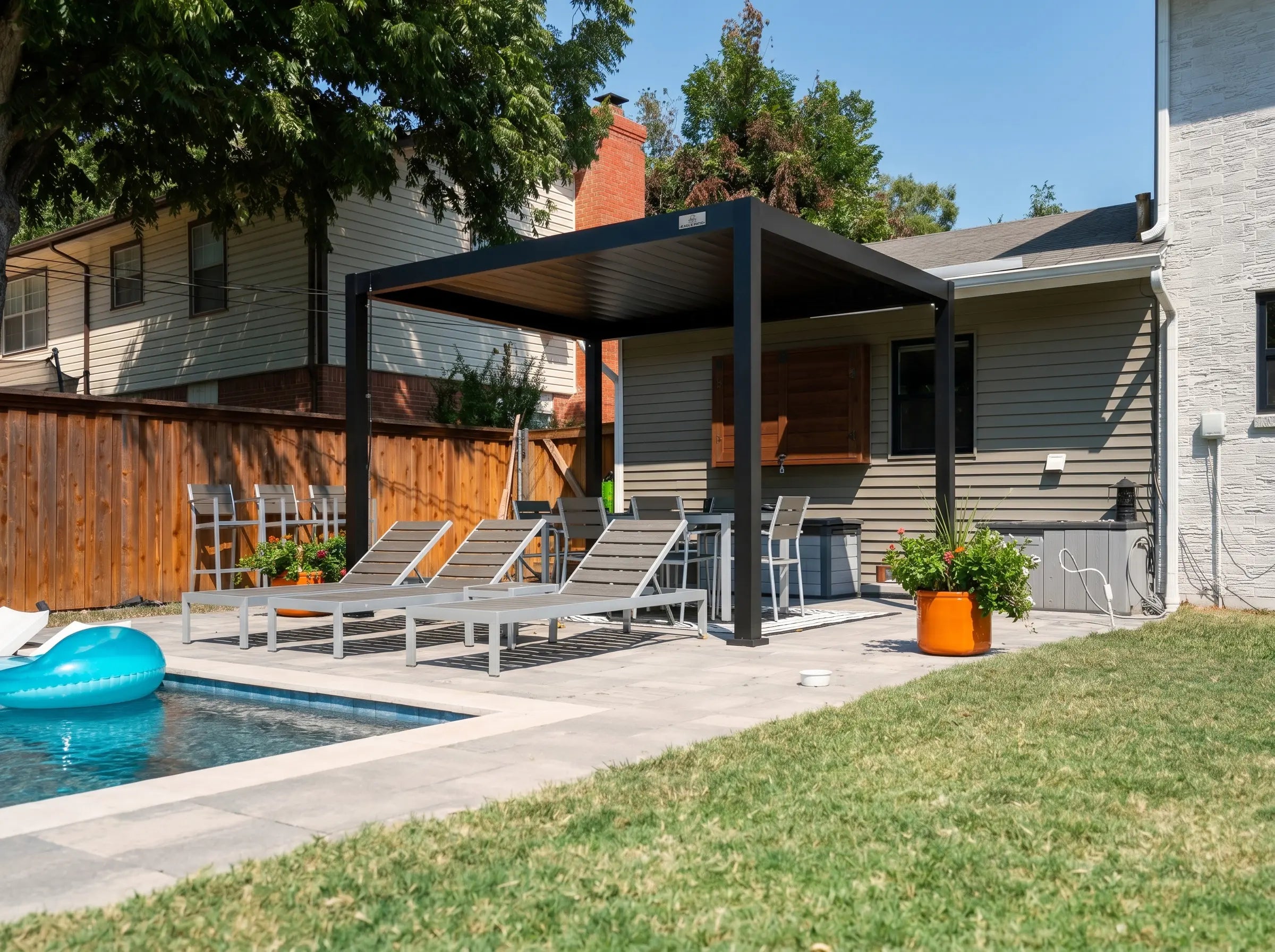
Best Patio Shade Ideas for Hot Backyards: Pergola vs Awning vs Gazebo
If you are searching for patio shade ideas because your backyard feels unbearable by mid-afternoon, the problem is usually bigger than “too much sun.” It may be direct afternoon exposure, heat radiating from concrete or pavers, glare from nearby walls or water, poor airflow, and a shade option that does not match the way the sun actually hits your backyard.
That is why the best patio shade idea is not always the biggest structure or the most expensive one. A small umbrella may work for a dining table. A retractable awning may be perfect for a west-facing wall. A gazebo may give the most fixed roof coverage. A louvered pergola may be the better long-term choice if you want adjustable shade, airflow, rain management, and a more finished outdoor living area.
This guide compares the most common backyard shade ideas so you can choose based on heat, sun direction, wind, privacy, surface type, and how you actually use your patio.
In This Guide
Compare the most common patio shade ideas and find the best option for your sun direction, heat problem, patio surface, and outdoor living goals.
- Why your patio feels so hot in the afternoon
- Quick answer: match your shade problem to the right solution
- 7 patio shade ideas for hot backyards
- Pergola vs awning: which is better?
- Gazebo vs pergola: shade comparison
- Are aluminum pergolas good for hot states?
- Does a pergola actually make a patio cooler?
- Before choosing a pergola, check your patio surface
- How to choose the best patio shade option
- FAQs
Why Your Patio Feels So Hot in the Afternoon
Many homeowners notice the same pattern: the patio feels fine in the morning, but by 2 or 3 p.m., nobody wants to sit outside. In hot states like Texas, Arizona, California, and Florida, that late-day heat can make a patio feel unusable for dining, grilling, lounging, or watching kids play outside.
Afternoon sun is difficult because it often comes from a lower side angle, especially on west-facing patios. Overhead shade may help at noon, but it may not block sunlight that cuts under the roofline later in the day. This is why side shade, privacy screens, awnings, and adjustable louvers can matter as much as a roof.
Hard surfaces also make the problem worse. Concrete, pavers, stucco walls, and pool decks can absorb and reflect heat. The CDC notes that UV exposure is highest in summer and between 10 a.m. and 4 p.m., and its school shade guidance explains that shade protection depends partly on reflected UV from surrounding surfaces such as sand and concrete.
Expert note: Before choosing a shade structure, look at where the sun hits your patio after 2 p.m. Product photos may show a beautiful backyard, but your real comfort depends on sun angle, surface heat, airflow, and side exposure. For long-term outdoor use, look for powder-coated aluminum, UV-resistant finishes, corrosion resistance, and a drainage design that matches your climate.
Quick Answer: Match Your Patio Shade Problem to the Right Solution

|
If Your Patio Problem Is… |
Best Starting Option |
Why |
|
You need quick, low-cost shade |
Patio umbrella |
Movable, simple, and affordable |
|
You need budget shade over a larger area |
Shade sail |
Covers more space if properly tensioned |
|
You need wall-side afternoon sun protection |
Retractable awning |
Works well for attached patios |
|
You want a fixed covered sitting area |
Gazebo or pavilion |
Gives consistent roof coverage |
|
You want adjustable shade and airflow |
Lets you control sun, shade, and ventilation |
|
|
You need shade plus privacy |
Helps block side sun and neighbor views |
|
|
You have pavers under the patio |
Check anchoring first |
Surface conditions matter for permanent structures |
7 Patio Shade Ideas for Hot Backyards

Patio Umbrella
A patio umbrella is the fastest way to add shade. It works well over a small dining table, lounge chair, or compact patio. It is also renter-friendly and easy to move.
The downside is coverage. Umbrella shade moves as the sun changes, and the base may not feel stable in windy areas. If your patio gets strong afternoon side sun, an umbrella may leave part of the seating area exposed.
Best for: small patios, quick shade, low budgets.
Watch out for: wind, limited coverage, and low-angle sun.
Shade Sail
A shade sail can cover more area than an umbrella and works well for poolside seating, casual backyard lounges, or budget-friendly shade over a wide space.
But shade sails need strong anchor points, proper tension, and the right angle for drainage. They can flap in wind if poorly installed, and they usually do not provide complete rain protection.
Best for: large casual shade areas.
Watch out for: anchor points, wind movement, and drainage slope.
Retractable Awning
A retractable awning is one of the best options for a patio attached to the house, especially when the sun hits a wall, sliding door, or window. The U.S. Department of Energy says window awnings can reduce summer solar heat gain by up to 65% on south-facing windows and 77% on west-facing windows, which helps explain why awnings are effective for wall-side sun.
Awnings are less ideal if you want to define a full outdoor room away from the house. They also need to be retracted in certain wind conditions.
Best for: attached patios and west-facing walls.
Watch out for: wind limits and smaller coverage zones.
Gazebo or Pavilion
A gazebo gives strong fixed roof coverage. It works well for a dedicated seating or dining area where you want consistent shade throughout the day.
The tradeoff is flexibility. A gazebo roof does not adjust, and the structure can feel visually heavy on a smaller patio. In humid areas, a more enclosed structure may also feel less airy than an open pergola.
Best for: fixed shade and traditional backyard structures.
Watch out for: size, style, airflow, and installation space.
Covered Patio
A covered patio is the most permanent roof-like option. It can provide strong weather protection and may feel like an extension of the house.
It also usually requires more planning, more budget, and sometimes permits. If you want a simpler outdoor upgrade without building a roof extension, a pergola, awning, or gazebo may be a more practical covered patio alternative.
Best for: permanent roof coverage.
Watch out for: cost, construction time, and permit requirements.
Louvered Pergola
A louvered pergola is a strong option for homeowners who want more than temporary shade. Unlike a regular open pergola, a louvered roof can be adjusted to control sunlight, shade, and airflow. When the louvers close, the roof can also help manage light rain, depending on the design and installation.
This makes an aluminum louvered pergola especially useful for outdoor dining, grill areas, poolside seating, and hot patios where comfort changes throughout the day. It can also pair with shade screens or aluminum slat walls for extra privacy and side sun control.
Best for: adjustable shade, airflow, and long-term outdoor living.
Watch out for: installation surface, anchoring, wind exposure, and budget.
Trees, Vines, and Green Shade
Trees and vegetation are excellent long-term shade solutions. The EPA explains that trees and vegetation lower surface and air temperatures by providing shade and cooling through evapotranspiration.
The limitation is time. A young tree will not solve this summer’s heat problem right away. Vines and planted pergolas can also require maintenance and careful placement.
Best for: long-term natural shade.
Watch out for: growth time, maintenance, and unpredictable shade coverage.
Pergola vs Awning: Which Is Better for a Hot Patio?

Choose an awning if your main problem is sun hitting one side of the house. For example, if your patio gets hot near a sliding door or west-facing wall, a retractable awning may block that direct exposure more efficiently than a freestanding structure.
Choose a louvered pergola if your goal is to create a more complete outdoor living area. A pergola can define a seating zone, dining space, poolside lounge, or grill area. Adjustable louvers give you more control over overhead light, and side screens can help with low-angle sun.
|
Factor |
Retractable Awning |
Louvered Pergola |
|
Best for |
Wall-side sun |
Full patio living area |
|
Shade control |
Extend or retract |
Adjust louver angle |
|
Airflow |
Open underneath |
Open-air structure |
|
Wind consideration |
Often needs retracting |
Depends on rating and anchoring |
|
Privacy options |
Limited |
Can add screens or slat walls |
|
Outdoor room feel |
Moderate |
Strong |
Expert verdict: An awning may be the better direct fix for one hot wall. A louvered pergola is usually stronger when you want to make a larger patio usable for more hours of the day.
Gazebo vs Pergola: Which Gives Better Shade?
A gazebo gives more fixed roof coverage. If you want a permanent shaded sitting area and do not care about adjusting light, a gazebo or pavilion can work well.
A pergola feels more open and flexible. A regular pergola offers partial shade, while a louvered pergola gives more control because you can change the roof angle. This is helpful when the sun shifts throughout the day.
Choose a gazebo if you want full-time fixed cover. Choose a louvered pergola if you want shade, airflow, and a modern outdoor living feel.
Are Aluminum Pergolas Good for Texas, Arizona, California, and Florida Heat?
Aluminum can get warm in direct sun, but that does not mean an aluminum pergola makes the patio hotter. The comfort of the seating area depends more on shade coverage, airflow, surface heat, and how the louvers are positioned.
For hot climates, aluminum has practical advantages. It is low maintenance, does not rot like wood, and is commonly used for outdoor structures because it handles weather exposure well when properly finished. In dry Arizona heat, airflow and overhead shade matter. In Texas, wind and afternoon sun may be bigger concerns. In Florida, humidity, rain, corrosion resistance, and anchoring need more attention. In California, poolside glare and outdoor dining comfort may drive the shade plan.
|
Region |
Common Patio Problem |
Shade Planning Tip |
|
Texas |
Afternoon sun and wind |
Prioritize adjustable shade and anchoring |
|
Arizona |
Dry heat and concrete surfaces |
Combine overhead shade with airflow |
|
California |
Pool glare and outdoor dining |
Use adjustable shade without closing the space |
|
Florida |
Humidity, rain, and wind |
Check drainage, corrosion resistance, and anchoring |
Does a Pergola Actually Make a Patio Cooler?
A pergola does not cool outdoor air like an air conditioner. It works by reducing direct sunlight, limiting radiant heat on furniture and flooring, and making the seating area more usable.
That difference matters. A shaded chair can feel much more comfortable even when the weather app shows the same air temperature. EPA archived heat island guidance notes that shaded surfaces may be 20–45°F cooler than peak temperatures of unshaded materials, which supports the general value of shade for hot surfaces. This should not be read as a product-specific promise, but it does show why shade can change how a patio feels.
Side shade can be just as important. If your patio gets low-angle afternoon sun, adding a shade screen or slat wall may improve comfort more than adding more overhead coverage.

Is a Louvered Pergola Waterproof?
Think of a louvered pergola as a rain management structure, not a sealed indoor roof. When the louvers are closed, the roof can help manage light rain and direct water toward a drainage path, depending on the system design.
But wind-driven rain, heavy storms, installation quality, and side exposure still matter. No outdoor pergola should be treated like a fully sealed room.
Before buying, check how the louvers close, where water drains, whether the posts or gutters direct runoff properly, and what the manufacturer says about rain use.
Can a Pergola Withstand Wind?
Some pergolas are designed for strong wind performance, but wind safety depends on more than the frame. Anchoring, surface type, installation quality, structure size, and local exposure all matter.
A pergola on a sheltered concrete patio may perform differently than one in an open, windy backyard. FEMA severe wind guidance also reminds homeowners to secure outdoor objects because wind can turn loose items into hazards.
Before choosing a pergola, ask:
- What is the wind rating?
- What surface will it anchor to?
- Is the patio exposed or protected?
- Are local permits or HOA approvals required?
- Who will handle installation?
Safety note: A wind rating only matters when the pergola is installed according to manufacturer requirements and anchored to a suitable surface.
Before Choosing a Pergola, Check Your Patio Surface
Permanent shade structures need more planning than umbrellas or shade sails. Concrete patios, paver patios, decks, gravel areas, and older slabs all have different anchoring needs.
A pergola can often be planned over a paver patio, but loose pavers should not be treated as the structural foundation. In many cases, posts need to connect to a stable base, footing, or approved anchoring system below the finished surface.
If your patio is built with pavers, gravel, soil, or an older slab, read a full pergola foundation guide before choosing your kit. This helps you avoid buying a structure that looks right in photos but cannot be safely installed in your actual backyard.
Add Privacy Screens for Shade, Comfort, and Neighbor Privacy

Privacy screens are not only for blocking views. They can also help with low-angle afternoon sun, glare, and wind comfort.
For example, a west-facing seating area may still feel hot under a roof if sunlight enters from the side after 4 p.m. A shade screen, aluminum slat wall, or outdoor curtain can make the area feel more comfortable and private.
|
Accessory |
Best For |
Benefit |
|
Shade screen |
Flexible side shade |
Helps reduce sun, wind, and visibility |
|
Aluminum slat wall |
Structured privacy |
Adds design, separation, and partial shade |
|
Outdoor curtains |
Soft decorative shade |
Budget-friendly but less durable |
|
Plants or vines |
Natural privacy |
Long-term, slower solution |
How to Choose the Best Patio Shade Option
Start with these six questions:
- What time of day is your patio too hot?
- Is the sun coming from overhead or from the side?
- Do you need temporary shade or a permanent structure?
- Do you need airflow?
- Do you need rain or wind performance?
- What surface will the structure sit on?
Do not choose a louvered pergola first if you only need temporary shade, if your budget is very limited, or if your surface is not ready for anchoring. In those cases, an umbrella, shade sail, awning, or foundation review may be the better first step.
But if you want to turn a hot patio into a more usable outdoor living space, a louvered pergola is worth comparing. It offers adjustable shade, open-air comfort, optional privacy screens, and a more finished backyard experience than temporary shade products.
Final Recommendation

The best patio shade idea depends on your real problem.
Use an umbrella for quick shade. Use a shade sail for budget coverage. Use an awning for wall-side afternoon sun. Use a gazebo for fixed roof coverage. Use a louvered pergola when you want adjustable shade, airflow, rain management, privacy options, and a long-term outdoor living upgrade.
Ready to make your patio usable beyond the hottest hours of the day? Compare EaglePatio aluminum louvered pergolas and shade accessories to find a setup that fits your sun direction, patio surface, and backyard goals.
FAQs
What is the best way to shade a patio?
The best way depends on sun direction, budget, wind, and how permanent you want the solution to be. Umbrellas and shade sails work for quick shade. Awnings help wall-side sun. Louvered pergolas work well for adjustable shade and long-term outdoor living.
What is the best patio shade for afternoon sun?
Afternoon sun often comes from a low side angle. A retractable awning, side shade screen, slat wall, or adjustable louvered pergola may work better than overhead shade alone.
Is a pergola good for shade?
Yes, but the type matters. A regular open pergola provides partial shade. A louvered pergola gives more control because the roof slats can be adjusted to block or filter sunlight.
Is a pergola better than an awning?
Not always. An awning is often better for attached patios with wall-side sun. A pergola is better if you want to define a larger outdoor seating, dining, or grill area.
What is better, a gazebo or pergola?
A gazebo gives more fixed roof coverage. A pergola feels more open and flexible. A louvered pergola is usually better if you want adjustable shade and airflow.
Does a pergola make a patio cooler?
A pergola does not cool the air like AC, but it can reduce direct sunlight and radiant heat on the seating area. That can make the patio feel more comfortable.
Are aluminum pergolas hot in the sun?
Aluminum can get warm in direct sun, but patio comfort depends more on shade coverage, airflow, surface heat, and louver position than on the frame material alone.
Is a louvered pergola waterproof?
A louvered pergola can help manage rain when the louvers are closed and the drainage system is properly designed. It should not be treated as a fully sealed indoor roof.
Can a pergola withstand wind?
Some pergolas are designed for strong wind performance, but safety depends on the product rating, anchoring method, installation surface, and local exposure.
Can I install a pergola on pavers?
A pergola can often be planned over a paver patio, but loose pavers alone should not be treated as the structural foundation. Check a full pergola foundation or paver installation guide before buying.
Related Posts

Best Pergola Kit for Your Patio Surface: How to Choose the Right Fit Before You Buy
The best pergola kit is not always the biggest one, the most expensive one, or the one with the most features. The best pergola kit is the one that fits your patio surface, your available space, your post layout, and your installation conditions. A standard pergola kit that works well on a suitable concrete patio may need a different plan on pavers, a raised deck, grass, gravel, or an older slab. If the surface and kit do not match, installation can become harder than expected. This guide helps you compare standard pergola kit directions by patio surface. It also shows where EaglePatio pergola models may fit different outdoor living scenarios. If you are still unsure whether your patio is ready for a pergola, start with our surface readiness guide first. Quick Answer: Match Your Pergola Kit to Your Patio Surface Before comparing roof styles or accessories, start with the surface under the posts. Patio Surface Standard Kit Direction What to Confirm First Concrete patio Aluminum louvered pergola or surface-mounted patio pergola Slab condition and anchor compatibility Paver patio Freestanding pergola kit Footings or piers below the paver layer Wood or composite deck Lightweight or deck-compatible direction Deck framing support Backyard lawn Freestanding backyard pergola Footing or ground support plan Gravel area Freestanding outdoor pergola Below-gravel structural support Existing slab Surface-mounted patio pergola Slab condition and base plate layout Outdoor kitchen or grill area Grill-focused louvered pergola Heat zone, ventilation, drainage, and accessory layout Smart outdoor living area Smart or motorized louvered pergola Power access, drainage, clearance, and installation space This table is a product direction guide, not an installation approval. Before buying, confirm your surface condition, standard kit dimensions, post spacing, and manufacturer installation requirements. Start With Surface Fit, Not Product Photos Product photos are helpful, but they do not tell you whether a pergola kit fits your patio. Before choosing a model, ask: What surface will the posts sit on? Is that surface structural or mainly decorative? How much space is available? Will the standard post spacing work? Can the base plates be installed correctly? Are footings, piers, anchors, or post bases needed? Will accessories change wind exposure or installation requirements? This approach helps you avoid a common problem: choosing a pergola that looks right online but does not match the actual installation conditions. If your patio surface is simple and suitable, you can move into product comparison. If your surface is complex, review the foundation guide before choosing a standard kit. Before You Compare Models, Check These 5 Things A pergola is not just a shade product. Once installed, it becomes an outdoor structure exposed to sun, rain, wind, seasonal temperature changes, and daily use. Before comparing standard pergola kits, check these five details: Surface typeConcrete, pavers, decks, grass, gravel, and existing slabs each require a different level of planning. Available installation spaceMeasure the usable area, not just the full patio size. Leave room for doors, furniture, walkways, grill clearance, and daily movement. Post spacing and base plate layoutA standard kit only works well when the post locations fit the actual patio layout. Anchor or footing requirementsThe visible surface may not be the real support. This is especially important for pavers, decks, grass, gravel, and older slabs. Accessory and power plansShade screens, slat walls, lighting, fans, heaters, and motorized features can affect wind exposure, wiring, clearance, and installation planning. A fit recommendation is not a custom design. It helps you narrow down which standard pergola kit is most likely to match your patio surface, space, and installation needs. Not sure which standard pergola kit fits your patio? Send us your patio details and photos for a quick fit recommendation. Best EaglePatio Pergola Direction by Outdoor Living Goal After checking your patio surface, the next step is to match your outdoor living goal with the right standard pergola direction. Outdoor Living Goal Recommended EaglePatio Direction Why It Fits Everyday patio shade Aluminum Louvered Pergola Adjustable louvers, built-in drainage, and a clean aluminum structure make it a strong direction for modern patio shade BBQ or outdoor cooking area Louvered Grill Pergola Designed around grill use, shade control, drainage, and outdoor cooking comfort Smart outdoor lounge Aluminum Smart Pergola Better for users planning motorized shade, integrated drainage, and a more automated outdoor living setup Privacy-focused patio Pergola with Shade Screens or Aluminum Slat Walls Adds privacy, sun control, and a more enclosed patio feel when accessory fit is confirmed Flexible backyard setup Freestanding aluminum pergola direction Works well when the post layout and foundation plan are clear for lawn, gravel, or open backyard spaces This table is not a custom design recommendation. It helps you narrow down which standard EaglePatio pergola direction may fit your surface, space, and outdoor living goal. If your patio surface is simple, you can continue comparing models. If your surface is uncertain, review the foundation guide or request a fit recommendation before buying. Concrete Patio: Best Pergola Kit Direction A concrete patio is often a strong starting point for a standard pergola kit when the slab is sound, stable, and suitable for anchors. For this surface, homeowners often compare: Aluminum louvered pergolas Surface-mounted patio pergolas Freestanding patio pergolas Smart louvered pergolas, if power access and installation space are suitable EaglePatio’s L5 Aluminum Louvered Pergola is a natural direction for many concrete patio setups. It is designed as an aluminum louvered pergola with adjustable louvers, integrated drainage, and manual or motorized roof options. It may be a strong fit when your patio is a stable concrete slab, you want adjustable shade, and you prefer a low-maintenance aluminum structure instead of ongoing wood maintenance. Before choosing a kit for concrete, confirm: Slab condition Post spacing Base plate layout Anchor compatibility Drainage around post bases Whether the concrete is old, cracked, thin, or unknown If the slab condition is uncertain, review the foundation guide before buying. Paver Patio: Best Pergola Kit Direction Paver patios need more planning than they may appear to need. The visible pavers are usually a finished surface layer, not the structural support for a permanent pergola. For paver patios, a freestanding pergola kit is often the better product direction, but the foundation plan should be reviewed before purchase. Before choosing a kit, confirm: Where each post will land Whether pavers need to be removed at post locations Whether footings or piers are needed below the paver layer Whether the standard post spacing works with your patio layout Whether drainage will remain effective after installation Do not choose a pergola kit only because it visually fits the paver area. Choose it because the post layout and support plan can work together. If you are unsure, ask for a fit recommendation before buying. Deck: Best Pergola Kit Direction A deck can be a useful location for a pergola, but only if the structure below the boards can support it. The key question is not: “Is my deck big enough?” The better question is: “Can the deck framing support the pergola posts and installation method?” For deck scenarios, homeowners may consider: Deck-compatible pergola options Lightweight pergola directions Freestanding pergolas placed near the deck Professional review before selecting a standard kit Before choosing a standard pergola kit for a deck, confirm: Deck age and condition Joist and beam locations Blocking or support under post locations Whether the deck is raised, floating, or attached to the house Wind exposure Weight and accessory plans Whether professional review is needed If you cannot confirm the framing, do not select a kit based only on deck size. Backyard Lawn or Gravel Area: Best Pergola Kit Direction A backyard lawn or gravel area can be a flexible location for a freestanding pergola. These spaces can help create a separate outdoor room for dining, lounging, poolside shade, or garden seating. The key is planning the support below the visible surface. For lawn or soil areas, confirm: Soil stability Drainage Post spacing Footing or ground support requirements Frost-depth considerations if applicable Whether excavation is required Whether 811 or local utility location is needed before digging For gravel areas, confirm: Gravel depth Soil condition below the gravel Post layout Drainage Footing or ground screw plan If excavation is required, contact 811 before digging or use your local utility-locate service Grass and gravel may offer more layout flexibility than a finished patio, but they still need a real support plan. If the pergola posts would sit only on soil or loose gravel, pause and review the foundation plan before choosing a kit. Outdoor Kitchen or Grill Area: Best Pergola Kit Direction If your pergola will cover a grill, BBQ zone, or outdoor kitchen, product fit is not only about shade. You also need to think about heat, airflow, clearance, lighting, and how people move around the cooking area. For grill-focused spaces, EaglePatio’s N5 E Louvered Grill Pergola is a relevant standard kit direction. It is designed as an aluminum louvered pergola for grills, with 90-degree adjustable louvers, built-in drainage, RGB lighting, and a grill-centered outdoor setup. Before choosing a grill pergola, confirm: Grill placement Clearance around the cooking area Ventilation and airflow Drainage direction Lighting needs Power access if applicable Whether accessories affect wind exposure Whether the patio surface supports the post layout A grill pergola should support how you cook, move, and gather—not just cover the grill. Planning a Smart Outdoor Living Area If you want a more automated outdoor space, a smart or motorized pergola may be a better direction than a simple shade structure. Smart pergolas are especially relevant when you want: Adjustable shade Motorized louvers Integrated drainage Lighting A more finished outdoor room experience Greater convenience for daily outdoor use EaglePatio’s I7 Pro Aluminum Smart Pergola is coming soon. If you are planning for motorized shade, lighting, drainage, and a more automated outdoor setup, contact our team to check whether your patio layout, power access, clearance, and surface conditions are ready. Smart features can improve comfort, but they also make planning more important. Privacy-Focused Patio: Screens, Slat Walls, and Accessory Fit If privacy is part of your plan, do not choose the pergola first and think about accessories later. Screens, curtains, slat walls, and shade panels can affect wind exposure, usability, and installation planning. For L5 pergola setups, EaglePatio offers shade screens and adjustable aluminum slat walls designed for Louvre 5 models. These accessories can help add privacy, sun control, and a more enclosed outdoor living feel. Before choosing a pergola with privacy accessories, confirm: Which sides need privacy Whether the accessory fits the pergola model Whether the side width matches the available accessory size Wind exposure Anchor and foundation requirements How the accessory affects airflow and daily use Accessories can make a pergola more useful, but they should be planned as part of the kit selection process. Aluminum, Wood, or Vinyl Pergola: Which Works Best? Material choice matters, but it should come after surface fit and installation planning. Aluminum pergolas are often a strong direction for homeowners who want a modern look, lower maintenance, weather resistance, and louvered roof options. They are especially common for patio shade, grill areas, smart pergolas, and clean outdoor living spaces. Wood pergolas offer a natural appearance and can work well in traditional or garden-style spaces. However, wood usually requires more ongoing maintenance, including sealing, staining, painting, or moisture protection. Vinyl pergolas can offer a clean, bright appearance and may be easy to maintain. Depending on the product, vinyl may have limitations in structure, finish, accessory options, or long-term performance. For EaglePatio’s product direction, aluminum louvered pergolas are the main fit when users want modern shade control, integrated drainage, and standard kit options for outdoor living spaces. If you want a deeper material comparison, read our aluminum vs wood pergola guide. Freestanding vs. Attached Pergola Kits Another major decision is whether to choose a freestanding or attached pergola. Freestanding Pergola Kits A freestanding pergola stands on its own posts. It can be placed on patios, backyards, poolside areas, garden spaces, or outdoor dining zones. Freestanding kits may be a good fit when: You want flexible placement You do not want to attach to the house Your patio layout is open You want a separate outdoor room Your surface can support the post layout Attached Pergola Kits An attached pergola connects to a house or another structure. It can create a smooth transition from indoor to outdoor living, but it may involve more structural review. Attached pergolas may require attention to: Wall connection Ledger attachment Flashing Drainage House structure condition Local code Permit or HOA rules If you are unsure whether your home can support an attached pergola, do not assume a standard kit will fit. Review the attachment requirements before buying. When to Ask Before You Buy Some patio setups are straightforward. Others deserve a fit check before choosing a standard pergola kit. Ask before buying if: Your patio is made of pavers Your deck is raised, older, or has hidden framing Your concrete slab is cracked or unknown Your lawn has soft or wet soil Your gravel area has no known support below it Your post spacing is unclear Your patio space is tight You plan to add screens, slat walls, curtains, fans, heaters, or lights You are unsure which standard size fits You are unsure whether your surface needs footings or anchors You are considering a smart or motorized pergola but are unsure about power access A fit recommendation is not a custom design. It helps you narrow down the best-fit standard kit based on your surface, space, photos, and installation needs. Not sure which standard pergola kit fits your patio? Send us your patio details and photos for a quick fit recommendation. Button: Get My Pergola Fit Recommendation FAQs About Choosing a Pergola Kit by Patio Surface What pergola kit is best for a concrete patio? A concrete patio often works well with an aluminum louvered pergola or surface-mounted patio pergola if the slab is suitable for anchoring. Check slab condition, drainage, base plate layout, and manufacturer requirements before choosing a kit. What pergola kit is best for pavers? A freestanding pergola kit is often a better direction for paver patios, but the support should usually go below the paver layer. Do not assume the pavers alone can hold the pergola. What pergola is best for a deck? A deck may require a lightweight or deck-compatible pergola direction, depending on the framing. Pergola posts should connect to structural framing, not only to deck boards. What pergola kit is best for a grill area? A grill-focused louvered pergola can help organize shade, airflow, and lighting around a BBQ or outdoor kitchen area. Confirm grill placement, clearance, ventilation, drainage, and surface support before choosing. Is an aluminum pergola kit better than wood? Aluminum pergolas are usually lower maintenance and more weather-resistant than wood. Wood offers a natural look but typically requires more ongoing care. The better choice depends on your patio, style preference, and maintenance expectations. Should I choose a freestanding or attached pergola kit? Choose freestanding if you want flexible placement or do not want to connect to the house. Choose attached only if the wall connection, drainage, structure, local rules, and installation requirements are suitable. Can I add screens or slat walls to a pergola kit? Many pergola kits can support accessories, but compatibility varies by model. Because severe thunderstorms can produce wind gusts over 58 mph, privacy accessories should be considered as part of the installation and anchoring plan. Screens and slat walls can affect wind exposure and installation planning, so check accessory fit before buying. What should I check before buying a standard pergola kit? Check your patio surface, available space, kit dimensions, post spacing, base plate layout, anchoring method, drainage, wind exposure, planned accessories, and manufacturer installation instructions. Final Step: Get a Pergola Fit Recommendation Before You Buy Choosing the right standard pergola kit is easier when you start with your patio surface, not just the product photo. Before buying, confirm your surface type, available space, post layout, foundation needs, accessory plans, and installation requirements. If everything matches, you can move forward with more confidence. If something is unclear, ask for a fit recommendation first. Not sure which standard pergola kit fits your patio? Send us your patio details and photos for a quick fit recommendation.
Learn more
How to Decorate Your Patio for Summer: 7 Ideas to Create the Ultimate Outdoor Retreat
Discover the best summer patio decorating ideas to keep your outdoor space cool, stylish, and inviting. From outdoor furniture and plants to louvered pergolas, find inspiration for your perfect backyard oasis.
Learn more
Can Your Patio Support a Pergola? Surface Readiness Guide
Before choosing a pergola, many homeowners start with size, color, roof style, and price. Those details matter, but they should not be the first question. Start with one question:Can your patio support a pergola? A pergola sits on posts, and each post needs a reliable support path. A concrete patio, paver patio, wood deck, grass lawn, gravel area, or existing slab can each require a different installation approach. Some surfaces may be ready for a standard pergola kit with the right anchors and hardware. Others may need additional foundation planning before you buy. This guide helps you understand whether your patio surface is likely ready for a pergola, what warning signs to look for, and when to pause before choosing a standard kit. This is not a construction manual. If you need details about footings, piers, anchors, post bases, frost depth, or deck-integrated foundations, read our foundation guide: How to Build the Perfect Pergola Base Foundation. Quick Answer: Which Patio Surfaces Can Support a Pergola? A patio surface that looks flat is not always ready to support a pergola. Some surfaces are structural. Others are mainly decorative or walkable. The difference matters because pergola posts need more than a finished surface under them. Use this table as a starting point. Patio Surface Surface Readiness Main Concern Best Next Step Concrete patio Usually easier if the slab is suitable Cracks, thickness, drainage, edge distance Check anchor and post base requirements Paver patio Needs review Pavers are usually a surface layer, not the structural base Review foundation options below the pavers Wood or composite deck Needs structural review Deck boards are not the main load path Check deck framing before choosing a kit Grass or soil Needs foundation planning Soil stability, drainage, and support depth Review footings, piers, or approved ground supports Gravel area Needs below-surface support Gravel alone is loose material Confirm what supports the posts below the gravel Existing slab Maybe, after inspection Unknown thickness, cracks, or settlement Inspect before drilling or anchoring This table is not an installation approval. It is a readiness guide. If your surface falls into a “needs review” category, do not rush into product selection. First confirm whether the surface, post layout, and installation requirements can work together. Why Surface Readiness Matters Before Buying a Pergola A pergola is more than a shade feature. Once installed, it becomes an outdoor structure exposed to wind, rain, sun, seasonal temperature changes, and daily use. Your patio surface affects: How the posts are supported Whether anchors, post bases, piers, or footings may be needed Whether the pergola stays aligned over time Whether water can drain away from the posts Whether accessories can be added safely Whether the installation matches manufacturer instructions Whether a standard pergola kit is a good fit for your space This becomes even more important if you plan to add privacy screens, curtains, lighting, fans, heaters, or a motorized louvered roof. Accessories can change how the pergola interacts with wind, weight, power access, and long-term use. In simple terms: the surface under the pergola is part of the buying decision. Concrete Patio: Usually Easier, But Still Needs Checking A concrete patio is often one of the easier surfaces for pergola installation, especially when the slab is sound, stable, and well-drained. Before assuming your concrete patio is ready, check: Are there visible cracks near the post locations? Is the slab uneven or settled? Does water pool where the posts would sit? Are the posts too close to slab edges or joints? Do the base plates and anchors match the pergola kit requirements? Is the slab condition known, or is it older and uncertain? A suitable concrete patio may work well with a surface-mounted pergola. But damaged, thin, poorly drained, or unknown concrete should be reviewed before drilling. What this means for standard pergola kits Concrete patios often pair well with aluminum louvered pergolas and surface-mounted patio pergolas when the slab is suitable. Before choosing a kit, confirm the post spacing, base plate layout, and anchor requirements. If your concrete condition is unclear, use the foundation guide as your next step before buying. Paver Patio: Beautiful Surface, But Not Always Structural Support A paver patio can look strong and permanent, but pavers are usually a finished surface layer. Many paver systems sit over bedding sand and compacted base material. That system may be suitable for walking, furniture, and outdoor living, but it should not automatically be treated as the structural support for a pergola. The common mistake is thinking that large pavers can hold pergola posts by themselves. Over time, pavers can shift, settle, or loosen. For many permanent pergola installations, the support needs to reach below the paver layer. That may mean planning footings or piers at the post locations, then finishing the pavers around the posts or bases. What this means for standard pergola kits A paver patio may still work well for a freestanding pergola kit, but only when the post layout and below-surface support plan make sense. Before buying, check: Where will each post land? Can the pavers be removed or cut at post locations? Is there a plan for support below the paver layer? Does the standard kit’s post spacing match your patio layout? If your pavers move under foot pressure, pause before choosing a kit. Wood or Composite Deck: Check the Framing, Not Just the Boards A pergola can be installed on some decks, but deck boards alone should not be treated as the main support structure. Deck boards are mainly the walking surface. The more important question is whether the framing below the boards can support the pergola posts and the forces acting on them, especially over time and under wind, snow, or moisture exposure. Before considering a deck-mounted pergola, check: Where are the joists and beams? Is there blocking or reinforced support under the planned post locations? Is the deck raised, floating, or attached to the home? How old is the deck? Are there signs of movement, rot, rust, water damage, or repair? Can the pergola be connected to structural framing instead of only to deck boards? Does water pool where the posts would sit? What this means for standard pergola kits Do not choose a pergola based only on deck size. If the framing cannot be confirmed, concrete footings, added structural support, or placing a freestanding pergola near the deck may be safer and more practical than mounting directly on the deck boards. Grass or Soil: Flexible Layout, But Requires a Real Support Plan A backyard lawn can be a great place for a pergola. It gives you flexibility to create a dining area, lounge space, poolside shade zone, or garden retreat. But grass and soil are not a finished structural surface. Pergola posts usually need a support method that reaches stable ground. That may involve: Concrete footings Concrete piers Approved ground screws Engineered ground anchors Another manufacturer-approved support method Soil conditions matter. Wet, soft, recently disturbed, rocky, or poorly drained soil may change the foundation plan. If digging is required, contact 811 before excavation or your local utility-locate service before excavation. What this means for standard pergola kits Grass and soil areas often work well with freestanding backyard pergolas when the post layout and support plan are clear. Before buying a kit, confirm the required post spacing and foundation approach. Gravel Area: Good for Drainage, Not Enough by Itself Gravel can help with drainage and create a clean outdoor surface, but loose gravel should not be treated as the structural base for a pergola. A pergola over gravel still needs a reliable load path below the surface. The posts may need to connect to footings, piers, ground screws, or another approved support method that reaches stable ground. Before planning a pergola over gravel, check: How deep is the gravel layer? What is under the gravel? Is the soil stable? Can the post locations align with real support points? Will hardware remain accessible for inspection or maintenance? Will water drain away from the post bases? What this means for standard pergola kits A gravel area may work for a freestanding pergola if the support system extends below the gravel. Do not assume that gravel alone can hold the pergola in place. Existing Slab: Inspect Before Anchoring An existing slab can look like a ready-made base, but older concrete should be inspected before drilling. Check for: Cracks Surface damage Settlement Unknown thickness Poor drainage Edge distance Joint locations Previous repairs Soft or broken areas around the planned post locations If the slab is suitable, a surface-mounted pergola may be possible. If the slab is damaged or uncertain, review the foundation requirements before choosing a standard kit. When to Pause and Request a Patio Fit Check You do not need a perfect patio to consider a pergola. But some surface conditions should make you pause before choosing a standard kit. Request a patio fit check before buying if: Your concrete patio has visible cracks, settlement, or unknown thickness Your pavers shift, move, or sit over sand Your deck is raised, older, floating, or has hidden framing Your soil is wet, soft, recently disturbed, or poorly drained Your gravel area has no known structural support below it Your post locations are close to slab edges, joints, steps, or slopes You plan to add privacy screens, curtains, fans, heaters, lights, or motorized features You need to dig but have not contacted 811 or a local utility-locate service You are unsure whether a standard pergola kit fits your patio layout These conditions do not always mean your project cannot work. They simply mean the installation plan should be reviewed before you buy. For a quick patio fit check, helpful details include: Your patio surface type Approximate patio size Photos of the full installation area Close-up photos of cracks, pavers, slab edges, steps, slopes, or deck framing if visible The pergola size or model you are considering Any planned accessories, such as screens, lights, fans, heaters, or slat walls Whether the area is exposed to strong wind Any known HOA or permit requirements The goal is not to create a custom design. It is to help you understand whether your surface appears compatible with a standard pergola kit, or whether you should review foundation requirements first. Not sure if your patio can support a pergola? Share your surface type and photos for a quick fit check. Check My Patio Fit Before You Move to Product Selection Once you understand your surface condition, you can make a better product decision. Before choosing a standard pergola kit, confirm: Available space Post spacing Base plate layout Installation surface Anchor or foundation requirements Drainage around post locations Planned accessories Local permit or HOA rules Manufacturer installation instructions If the surface is straightforward, you may be ready to compare standard pergola kits. If the surface is complex, your next step should be the foundation guide. For projects involving footings or frost-depth concerns, always check local footing and frost-depth requirements before installation. Read Next: How to Build the Perfect Pergola Base Foundation FAQs About Patio Surface Readiness Can my patio support a pergola? It depends on the surface and condition. Suitable concrete may support a surface-mounted pergola, while pavers, soil, gravel, and some decks often need additional review or foundation planning. Can you install a pergola on concrete? Yes, if the concrete is suitable for anchoring. Check cracks, drainage, edge distance, and manufacturer hardware requirements before drilling. Can you install a pergola on pavers? Possibly, but pavers alone should not be assumed to support a pergola. A permanent installation often needs support below the paver layer. Can a pergola be installed on a deck? Yes, but only if the deck framing can support it. Pergola posts should not be fastened only to deck boards. Can you put a pergola on grass? Yes, but grass or soil usually needs footings, piers, approved ground screws, or another proper support method. Can you install a pergola on gravel? Possibly, but gravel alone is not structural support. The pergola usually needs support below the gravel layer. Should I check my patio before buying a pergola kit? Yes. Before buying, confirm your surface type, available space, post spacing, base plate layout, drainage, and installation requirements.
Learn more

