


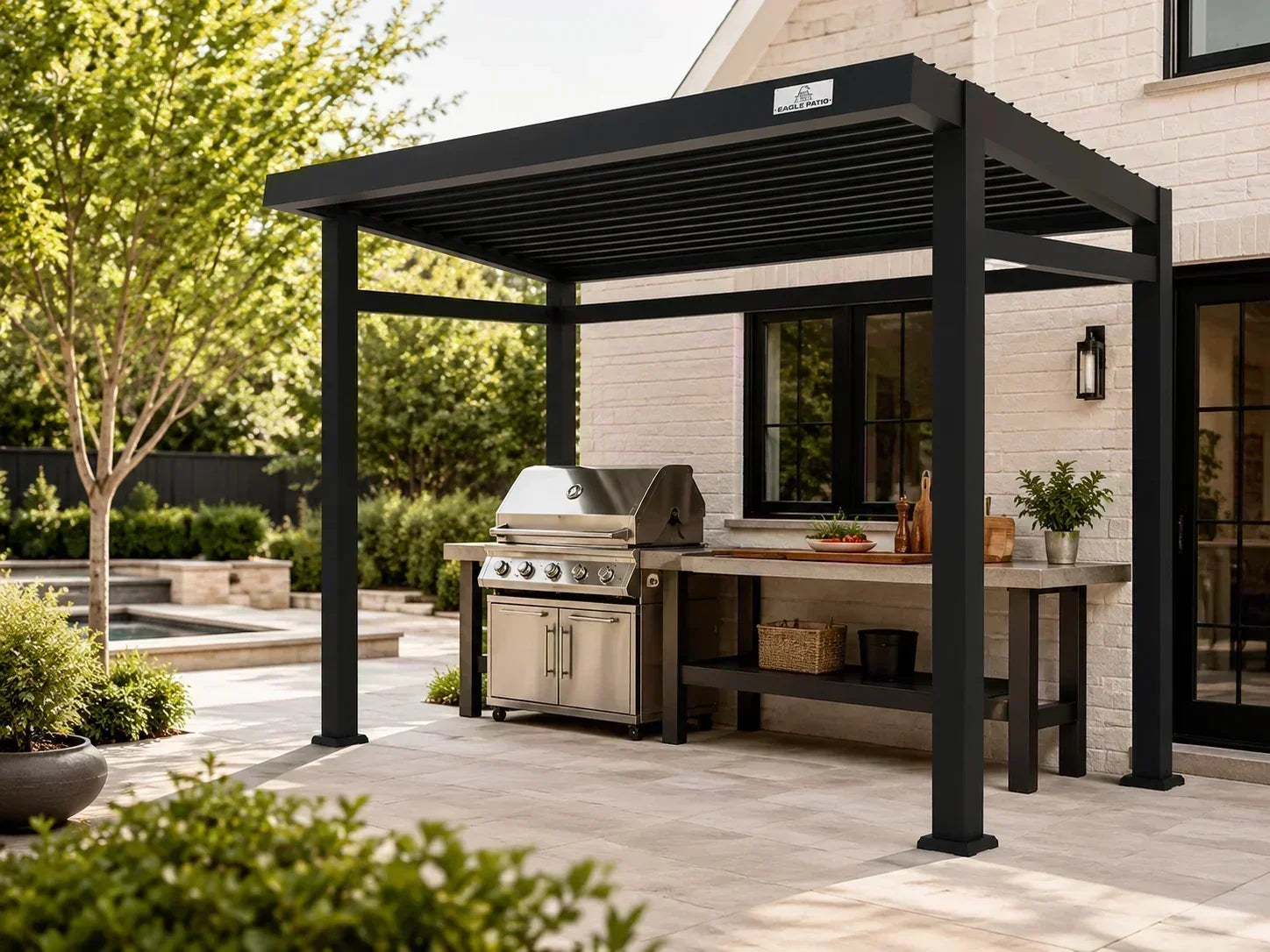
You have probably seen one over a patio: a few posts, a flat top, and plenty of open space around the sides. You may also have wondered what it actually does—especially when the roof appears to have gaps.
The confusion makes sense. Today, the word pergola can describe anything from a simple wooden garden frame to an aluminum structure with a roof that opens and closes.
In simple terms, a pergola creates a more comfortable, more purposeful place to spend time outside. What it can do depends largely on the roof above it.
What Is a Pergola?

A pergola is an outdoor structure supported by posts or columns. Across the top, beams, slats, panels, or louvers create the roof area.
Some pergolas attach to the house, usually beside a patio door. Others stand on their own in the yard, beside a pool, or over a separate seating area.
Traditional pergolas often have spaced wooden beams across the top. They allow sunlight and air to pass through while creating some shade below. Modern pergolas may use fixed panels, shade screens, slat walls, or adjustable louvers to offer more control over the space.
That basic combination—supporting posts, an overhead frame, and open sides—is what makes the structure a pergola.
What Is the Purpose of a Pergola?
So what is the point of a pergola in a real backyard? Its main purpose is to give one part of the yard a clear use.
Imagine a dining table sitting by itself on a large concrete patio. It works, but the area may still feel unfinished. Add a pergola above it, and the same furniture begins to feel like an outdoor dining room.
The posts mark the edges of the space. The roof draws the eye upward. Furniture, lighting, a grill, or a privacy screen now has a natural place within the layout.

A pergola can also add shade without making the patio feel closed in. Open beams create filtered light. Fixed slats provide a steadier shade pattern. Adjustable louvers let you change the balance of sunlight and airflow during the day.
This is the point of a pergola: it turns an exposed or loosely arranged outdoor area into a place designed for a particular part of daily life.
Why Do Pergolas Have Open Roofs?

The open roof comes from the pergola’s original role in gardens. Spaced beams created light shade, supported climbing plants, and allowed air to move through the structure.
That design still works well when the goal is to keep a strong connection to the garden and sky. Sunlight filters between the beams instead of disappearing completely, and the space feels airy even when furniture sits underneath.
An open roof does not always mean the same thing, however. The space between the beams, their direction, and the angle of the sun all affect the shade below.
Modern pergolas give homeowners more roof options. They can keep the open feel of a traditional pergola while adding fixed slats, a retractable canopy, solid panels, or louvers that rotate as the weather changes.
What Types of Roofs Can a Pergola Have?
The roof is one of the most important parts to compare because it shapes how the space will feel throughout the day. And the main pergola roof types range from open beams to adjustable louvers.
|
Pergola roof type |
What it feels like |
Shade and rain coverage |
Good fit for |
|
Open beams or lattice |
Bright, open, and closely connected to the garden |
Filtered shade with little rain coverage |
Garden seating and decorative spaces |
|
Fixed slats |
Open, with a more consistent shade pattern |
Partial shade; rain coverage varies by design |
Patios that need regular daytime shade |
|
Retractable canopy |
Soft and flexible |
Can be opened or closed; performance depends on the fabric and drainage |
Seasonal shade and casual seating |
|
Solid roof or panels |
More like a permanent patio cover |
Consistent overhead shade and greater rain coverage |
Patios where fixed shelter is the priority |
|
Adjustable louvers |
Open when wanted and more covered when needed |
Louvers can tilt for shade or close for overhead rain management |
Dining, lounging, and patios used in changing conditions |
An open-beam pergola suits a garden or patio where light, airflow, and visual structure matter most. A solid roof works better when the homeowner wants the same level of coverage throughout the day.
A louvered pergola offers a middle path. Open the louvers for more light and airflow, tilt them for shade, or close them when more overhead coverage is needed. The exact performance depends on the product design, drainage system, installation, and local conditions.
You can learn more in our guide to how louvered pergolas work.
What Is a Pergola Used For?
A pergola can work in many parts of a backyard, but the best layouts usually begin with one main activity.
Outdoor dining
A pergola gives a dining table a clear home on the patio. It can provide shade during daytime meals and support outdoor lighting for dinner after sunset.
Measure the table with every chair pulled out. Guests should still have room to sit down and move around without running into a post.

Grilling and outdoor cooking
A pergola can bring a grill, prep counter, and nearby seating into one organized area. It works especially well when the grill already sits on a patio close to the kitchen.
Plan around the grill manufacturer’s ventilation and clearance instructions. The pergola should support a safe, comfortable layout rather than crowding the equipment into a corner.

Lounging and entertaining
An outdoor sofa can feel lost on a large open patio. Under a pergola, it becomes part of a defined lounge.
A shade screen may help with afternoon sun from one side. A slat wall can add privacy or provide a background for a TV area. Other sides can remain open to preserve airflow and views.

Poolside seating
A freestanding pergola can create a resting place beside a pool while keeping the main walkway open. Place the posts away from busy paths and leave room for cleaning, drainage, and movement around wet areas.

Hot tub areas
A pergola can make a hot tub feel more connected to the rest of the backyard. A privacy wall on one side may create a more comfortable setting, while open sides keep the space from feeling boxed in.

For more examples, explore these louvered pergola ideas for dining, grilling, pools, and hot tubs.
What Are the Main Types of Pergolas?
Pergolas are often grouped in three different ways: where they stand, what they are made from, and how the roof works.
An attached pergola connects to the house. It can make the patio feel like a natural extension of an indoor dining room or living room.
A freestanding pergola supports itself with its own posts. It can sit farther into the yard, beside a pool, or over a separate grill and seating area.
See our guide to freestanding vs. wall-mounted pergolas for a closer comparison.
Pergolas also come in wood, vinyl, steel, and aluminum. Wood offers a warm, traditional look but needs regular care. Vinyl is relatively easy to maintain but comes in fewer finishes. Steel is strong but needs appropriate protection from corrosion.
Aluminum is popular for modern pergola kits because it does not rot, requires relatively little maintenance, and works well with fixed or adjustable roof systems.
Pergola vs. Gazebo vs. Patio Cover
These structures may serve similar parts of a yard, but they create different kinds of outdoor spaces.
|
Structure |
Typical roof |
Typical layout |
Overall feel |
|
Pergola |
Open, covered, or adjustable |
Attached or freestanding |
Open and flexible |
|
Gazebo |
Solid and often pitched |
Usually freestanding |
A separate sheltered destination |
|
Patio cover |
Fixed and usually solid |
Commonly placed beside the house |
A direct extension of the home |
A pergola is a good match when openness and roof choice matter. A gazebo creates a more separate gathering place, while a patio cover usually provides fixed coverage over the area closest to the house.
Read the full pergola vs. gazebo vs. pavilion comparison if you are deciding between outdoor structures.
How to Choose the Right Pergola for Your Space

Start with the way you want to use the patio. A beautiful structure will have limited value if the furniture feels cramped or the shade falls in the wrong place.
Ask yourself four questions:
- Will the space be used mainly for dining, grilling, lounging, or something else?
- Do you want filtered light, fixed shade, or a roof you can adjust?
- Should the pergola connect to the house or stand in another part of the yard?
- How much room do the furniture and walking paths need?
Measure the full working area, not only the empty patio. Include chairs when pulled out, open doors, grill clearance, furniture depth, and the space taken up by the pergola posts.
The supporting surface matters as well. Concrete, pavers, decks, grass, and gravel may require different preparation and anchoring. Confirm the surface and installation plan before selecting a model.
Our pergola size guide can help you compare furniture layouts and standard dimensions.
Frequently Asked Questions
What is a pergola in simple terms?
A pergola is an outdoor structure with posts supporting a roof frame. It creates a defined area for dining, relaxing, grilling, or enjoying the garden. Depending on the roof, it may provide filtered, fixed, or adjustable shade.
What is the main purpose of a pergola?
A pergola gives an outdoor area a clearer purpose. It frames furniture and activities within a defined space while adding shade and visual structure. The roof type determines how open or covered the area feels.
Do pergolas provide shade?
Yes, although the amount varies. Open beams create filtered shade. Fixed slats provide a more consistent pattern. Solid panels offer steady overhead shade, while adjustable louvers let you change the amount of direct sunlight.
Do all pergolas have open roofs?
No. Traditional pergolas usually have spaced beams or rafters. Modern pergolas may use fixed slats, retractable canopies, solid panels, or adjustable louvers. Each option provides a different balance of light, shade, airflow, and rain coverage.
What can you put under a pergola?
Common choices include dining tables, sofas, grills, prep counters, poolside loungers, and hot tubs. Plan the structure around the main activity and leave enough space for furniture, equipment, doors, and walking paths.
What is the difference between a pergola and a gazebo?
A pergola typically has a flat roof that may be open, covered, or adjustable. It can be attached or freestanding. A gazebo is usually freestanding with a solid, pitched roof, creating a more separate sheltered area in the yard.
A More Purposeful Place Outdoors
A pergola gives shape and purpose to an outdoor area. The right roof, size, and placement can turn an exposed patio into a comfortable setting for meals, weekends, and everyday time outside.
Compare EaglePatio aluminum louvered pergolas by size, roof control, and outdoor use.


