


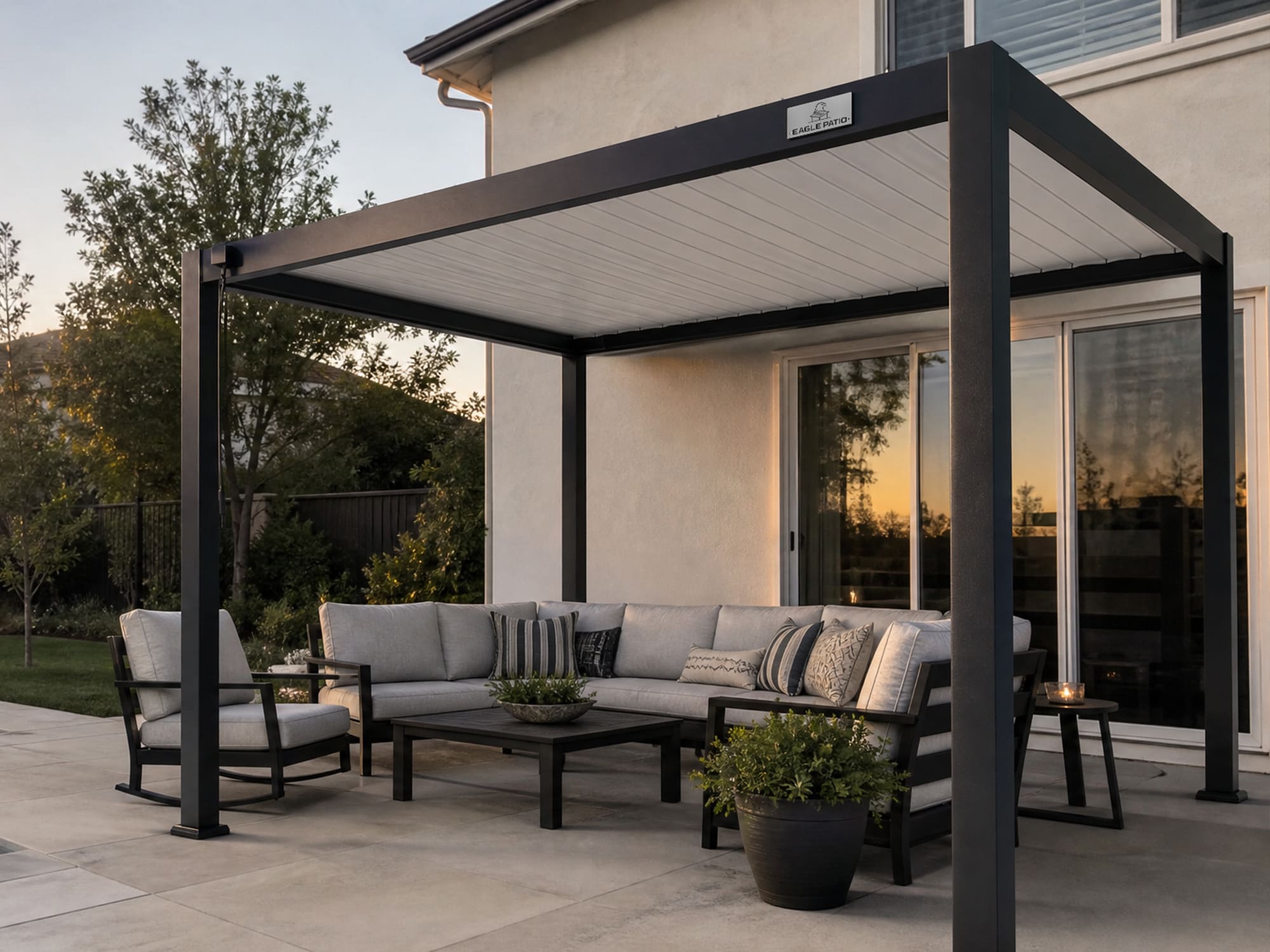
A pergola is often worth the investment when it turns an exposed patio into a space you can use more often. By adding usable shade and defining an outdoor living area, it can make dining, relaxing, and entertaining outside more comfortable. A louvered pergola adds greater control over sunlight, airflow, and overhead coverage as conditions change.
Ultimately, its value depends less on the structure alone than on how well the size, roof system, and installation plan match your needs, property, and total project budget.
Are Pergolas Worth It? The Quick Answer
A pergola is usually worth the investment when it solves a recurring outdoor comfort problem and supports activities you already enjoy.
|
A Pergola Offers Strong Value When… |
The Value Is Strongest Because… |
|
Your patio becomes uncomfortable in direct sun |
Added shade creates more usable outdoor hours |
|
You regularly dine, grill, relax, or entertain outside |
The structure supports an existing routine |
|
You want an open-air space rather than a fully enclosed room |
You keep natural light and ventilation |
|
You expect to remain in the home for several years |
You have more time to enjoy the investment |
|
Your surface and anchoring plan are confirmed |
The project is less likely to face costly surprises |
|
You choose the roof and accessories around actual sun exposure |
You pay for features that improve daily comfort |
The decision is less favorable mainly when you only need temporary shade or expect a climate-controlled room. For most homeowners already planning to improve a frequently used patio, the better question is which pergola will create the most value.
Why a Pergola Can Be Worth the Investment

The return from a pergola is usually felt through improved use. Overhead shade can make an exposed patio comfortable for morning coffee, family meals, reading, or hosting friends. The structure also creates a natural zone for a dining table, outdoor sofa, grill station, or poolside seating without sacrificing the open-air feeling.
A louvered roof adds flexibility. The louvers can open for light and airflow, angle to reduce direct sun, or close for greater overhead coverage during light rain. Low-angle sun can still enter through the sides, but a shade screen, slat wall, or landscaping can improve comfort. If heat is the main problem, compare patio shade options for hot backyards before planning the layout.
Use This Four-Part Framework to Maximize Pergola Value
The strongest projects align four factors: problem, use, property, and total cost.

1. Match the Pergola to the Actual Patio Problem
Start with the reason you avoid the patio. Overhead sun calls for roof coverage; strong western sun may also require side shade. If conditions change throughout the day, adjustable louvers may provide more value than a fixed solution.
Rain expectations also matter. A closed louvered roof can manage overhead sun and light rain while open sides preserve ventilation. Wind-driven rain can still enter, so select accessories and outdoor furniture accordingly.
For a closer look at weather performance, see how louvered pergolas manage rain.
2. Build Around Activities You Already Enjoy
Picture an ordinary week, not an idealized party. Will the pergola cover a table used several evenings a week, poolside seating, a grill area, or the place where you unwind after work?
Repeatable uses justify the investment and guide the location, size, roof, and accessories. The best pergola is not necessarily the largest; it is the one designed around how you live.
3. Confirm the Property Before Ordering
Review:
- The supporting surface and what lies beneath it
- Anchoring or footing requirements
- Patio drainage
- Furniture clearance and walking paths
- Sun direction throughout the day
- Wind and snow conditions
- Property setbacks, HOA rules, and local permits
- Access for delivery and assembly
A concrete slab can be a straightforward starting point, but its thickness and condition matter. Pavers usually need support or footings beneath them rather than anchors placed only into individual stones. A wood or composite deck may need a structural review.
For an older slab, deck, or uncertain paver base, have the proposed installation reviewed by a qualified contractor or structural professional and follow the manufacturer’s installation instructions.
Before buying, check whether your patio can support a pergola and review the relevant pergola foundation requirements.
4. Compare the Total Project Cost
The listed price is only one part of the investment. The complete budget may also include:
- Shipping and sales tax
- Site leveling or drainage improvements
- A concrete slab or individual footings
- Paver or deck reinforcement
- Professional assembly
- Permit or HOA fees
- Electrical work for a motor or lighting
- Shade screens, privacy walls, or other accessories
- Removal of an existing structure
Confirm what each seller includes. A higher package price may offer better value if it includes delivery, necessary components, warranty coverage, or accessible replacement parts.
If you are choosing between a kit and a custom-built structure, compare the complete cost to buy or build a pergola, not only the initial material price.
Which Type of Pergola Offers the Best Value?

|
Structure |
What You Gain |
Best Fit |
|
Traditional open-roof pergola |
Architectural definition and partial shade |
Homeowners focused on appearance, filtered light, or climbing plants |
|
Fixed-roof shade structure |
Consistent overhead coverage |
Patios where fixed shade is more important than changing light levels |
|
Louvered pergola |
Adjustable shade, airflow, and overhead rain management |
Homeowners who want more control over patio comfort and frequent use |
|
Solid patio cover |
More complete fixed overhead protection |
Spaces where permanent coverage matters more than open-roof flexibility |
|
Gazebo or pavilion |
A defined, permanently covered gathering area |
Larger yards suited to a visually heavier standalone structure |
|
Retractable awning |
Temporary wall-side shade |
Smaller spaces needing occasional shade beside the home |
For many homeowners considering a premium structure, a louvered pergola offers the strongest balance of open-air design and functional control. Its higher upfront investment can be worthwhile when roof adjustments make the patio comfortable more often.
Motorization adds convenience but is not required. A manual roof may deliver the same core shade benefit at a lower cost; motorization may be worthwhile if quick adjustments matter to your routine. Compare a manual and motorized pergola.
Calculate Cost per Use, Not Just Purchase Price
Estimated cost per use = Total installed cost ÷ years of ownership ÷ annual days of use
Suppose a hypothetical pergola project costs $15,000 after installation, foundation work, and necessary accessories. This figure demonstrates the calculation and is not presented as an average market price.
Over ten years:
- Used four days per week: approximately $7.21 per use
- Used once per week: approximately $28.85 per use
- Used for eight events per year: approximately $187.50 per use
The calculation shows why frequency matters. An outdoor area used throughout the week can deliver far more lifestyle value than one reserved for occasional events.

The $15,000 example above illustrates how cost per use works—not what every pergola project must cost. A right-sized pergola can provide the shade and function you need without paying for unused space or features. Explore our options to find a pergola that fits your patio, lifestyle, and budget.
Factor Maintenance Into Long-Term Value
An aluminum pergola generally needs periodic washing, removal of debris from drainage channels, and inspection of fasteners and moving components. Wood may also require staining, sealing, or refinishing over time.
Review the manufacturer’s care instructions, warranty requirements, and availability of replacement parts. A manageable care routine helps preserve appearance and function.
When Might a Pergola Not Be the Right Fit?
A pergola is designed for open-air living, so another solution may offer better value when:
- You only need low-cost, movable shade for occasional use
- You want a fully enclosed, insect-controlled, or climate-controlled room
- Existing trees or buildings already provide the shade you need
- You expect to move soon or cannot make permanent changes to the property
- Drainage, structural, permit, or HOA questions remain unresolved
|
Primary Need |
Better Starting Direction |
|
Low-cost, movable shade |
Patio umbrella or shade sail |
|
Temporary shade beside an exterior wall |
Retractable awning |
|
Adjustable shade and airflow |
Louvered pergola |
|
Fixed overhead coverage |
Solid patio cover or pavilion |
|
Enclosed, insect-controlled space |
Screen room |
|
Climate-controlled addition |
Sunroom |
If several options appear suitable, compare a pergola, gazebo, and patio cover by shade, weather protection, foundation requirements, and expected use.
Permit rules vary by location, structure size, and attachment method. Contact the building department before ordering; the USAGov local government directory can help identify it.
Does a Pergola Add Value to a Home?
A well-designed pergola can improve buyer appeal by making an outdoor area look intentional and usable. No universal resale percentage applies; local demand, design, materials, installation, and maintenance all influence financial value.
The National Association of REALTORS® outdoor remodeling research examines cost recovery and homeowner enjoyment for selected outdoor projects. It does not establish a universal pergola ROI, but it highlights that resale recovery and personal enjoyment are separate forms of value.
For most owners, the additional time spent comfortably using the patio is the more immediate and predictable return.
Three Realistic Pergola Buying Scenarios
 EaglePatio Customer project in Dallas, Texas: A louvered pergola installed over a concrete patio to create shade for regular outdoor dining.
|
Situation |
Likely Direction |
Why |
|
A sunny kitchen patio used for family meals |
Pergola; consider a louvered roof |
It solves a frequent problem and supports an existing routine |
|
Poolside seating that needs shade without feeling enclosed |
Louvered pergola |
The adjustable roof balances coverage, sky, and airflow |
|
A buyer wants heating, cooling, insect control, and full weather protection |
Screen room or sunroom |
The expected experience is indoor rather than open-air |
So, Is a Pergola Worth It?
For most homeowners who want more usable shade and a defined outdoor living area, the answer is yes. A pergola can make an exposed patio more comfortable, extend the time you spend outside, and create a lasting place for dining, relaxing, and entertaining.
A louvered pergola is especially worthwhile when you want more control over changing sun, airflow, and light rain rather than relying on fixed shade.
The key is choosing the right size, roof system, and installation plan so the value appears in everyday use.
Before ordering, confirm that:
- You know which patio problem the pergola will solve
- You expect to use the covered area regularly
- The size supports your furniture and walking paths
- The roof type matches your shade and weather expectations
- The supporting surface and anchoring plan are confirmed
- The total project cost fits your budget
- Local permit and HOA requirements have been checked
Once those points are clear, you can compare aluminum louvered pergola sizes and roof options and choose the structure that best fits your patio.
Frequently Asked Questions
Are pergolas worth the money?
Yes. A pergola can be worth the money when it makes a sunny or underused patio comfortable for regular dining, relaxing, grilling, or entertaining. Value is strongest when the structure and total project fit the property.
Is a louvered pergola worth the extra cost?
It often is if changing conditions limit patio use and you value adjustable shade, airflow, and overhead rain management.
What costs should I include beyond the pergola price?
Include delivery, taxes, site preparation, footings, anchoring, assembly, permits, electrical work, and accessories. Deck or paver installations may need reinforcement.
Do pergolas provide enough shade?
They can provide effective overhead shade. Results depend on roof design, orientation, louver position, and sun angle. Side screens or landscaping can help with low-angle sun.
Are aluminum pergolas expensive to maintain?
They generally need periodic cleaning, drainage-channel clearing, and hardware inspections rather than staining or refinishing. Follow the manufacturer’s care instructions.
Does a pergola add value to a home?
A pergola may improve usability and buyer appeal, but it does not guarantee a fixed resale return. Design, materials, installation, and local preferences all matter.
Is a pergola better than a gazebo or patio cover?
A louvered pergola suits adjustable shade and airflow; a gazebo or solid patio cover provides fixed coverage. Choose according to your weather expectations, space, and use.


